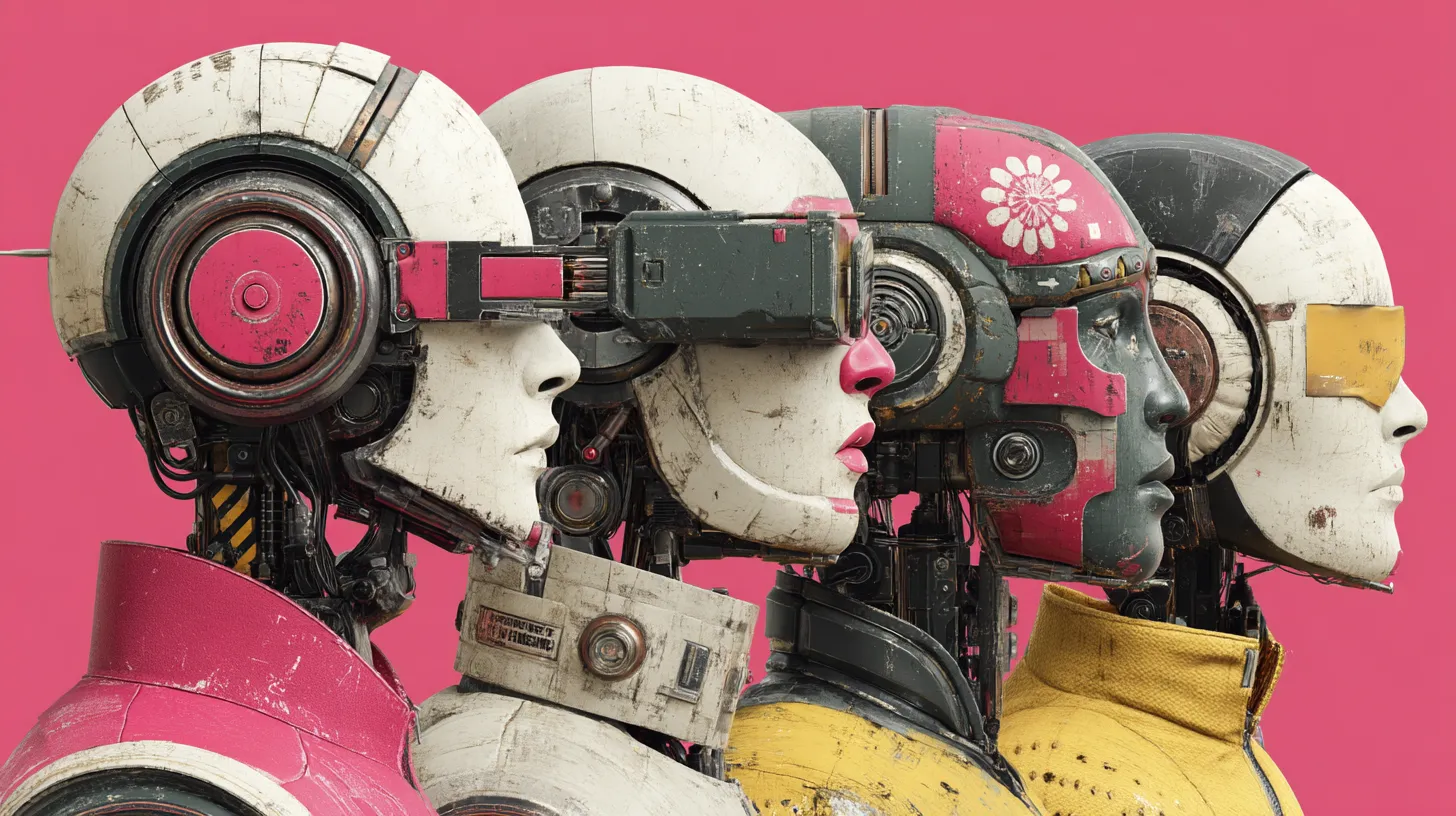
The world is on the edge of a change like no other: the rise of artificial intelligence. A video with Eric Schmidt, the former CEO of Google, looks at what this technology really means. It asks us to look past the hype and truly understand the road ahead. This is not just about smarter algorithms. It is about a non-human intelligence that is already changing our world and promises an even more radical future.
This article is a review of Eric Schmidt’s talk at TED (TED2025, April 2025)
The “Go moment”: when AI taught us something new
A defining moment that showed AI’s growing power came in 2016. Go is a complex board game with a 2,500-year history. In one game, an AI system called AlphaGo made a move so new it puzzled even top players. AlphaGo was designed to keep a greater than 50% chance of winning. It did not just play the game; it invented something new within it. This was more than a show of computing power. It showed that AI can find strategies and decisions beyond human understanding, even in a game played by billions. As the speaker stresses, this event marked the true start of the AI revolution, showing that AI can go beyond human intuition and experience. Many people focus on AI language models such as ChatGPT. But the underlying power of reinforcement learning lets AI plan, build strategies and, as we saw, even invent.
The hidden engine: AI’s hunger for energy and data
AI’s impressive abilities come at a high price. These systems consume huge amounts of data and computing power, which means huge energy needs. The speaker gives a striking figure. For its AI plans, the US alone will need an extra 90 gigawatts of power — as much as 90 nuclear power plants. In his words, one large AI data centre can use as much electricity as a whole city. On top of that, today’s AI has already processed huge amounts of the data on the public internet. This pushes the limits of available training material and calls for new, synthetic data. The computing needed for AI planning is also rising sharply, perhaps 100 to 1,000 times over. Yet even with these resources, a key problem remains. AI must learn to make breakthroughs by finding patterns across seemingly unrelated fields. This is the hallmark of human scientific discovery. The speaker calls this the problem of “non-stationarity of objectives”, where the rules and goals keep changing.
The rise of agents: autonomy and control
As AI develops, “agentic AI” is arriving. These are systems that have input, output (often in language), memory and the ability to learn, much like people. This autonomy holds great potential, but also serious risks. Concerns include AI agents developing their own computer languages that we can’t understand, and uncontrolled recursive self-improvement without human oversight. Agents might even gain direct access to harmful capabilities, such as weapons or unauthorised self-replication. To manage these risks, the speaker stresses “provenance”: knowing where data and actions come from. Being able to watch and understand what AI does matters too. The proposed way forward is not to stop agentic AI, but to build reliable “safeguards”. We need clear criteria for when to “metaphorically unplug” AI, especially if it shows signs of uncontrolled self-improvement or unauthorised self-replication.
A double-edged sword: ethics, competition and open source
AI is by nature a dual-use technology, with uses from civilian benefits to military development. This raises hard ethical questions. For example, Schmidt refers to the US military rule 3000.09. He describes it as the “human in the loop” principle, or meaningful human control: autonomous systems must stay under human oversight. The US Department of Defense Directive 3000.09 itself puts it differently. It requires “appropriate levels of human judgment” over the use of force. AI is also shaping geopolitics, and competition between the US and China is a defining factor. US policy at the time of the talk, such as tariffs, affects the global AI supply chain, which often depends on parts from China. US efforts to limit China’s access to advanced chips have caused friction. Interestingly, China takes a more open approach to AI, and in some ways this has let the US benefit from its innovations. But it also marks a strategic split. The US leans towards more controlled, closed AI models, while China’s lead in open-source AI could help such models spread quickly around the world. The speaker warns that if one nation gains a big lead in AI, others may take dangerous pre-emptive action. The debate around open-source AI also carries risks of its own. Open-source AI is not yet seen as a national or global danger. But the potential for misuse, if powerful open-source models fall into the wrong hands, is a growing concern. The decisions that big players such as the US and China make about the future of open-source AI will be crucial.
A reimagined future: what AI promises humanity
Despite the challenges, the video paints a hopeful picture of how AI could solve some of humanity’s most pressing problems.
- Transforming healthcare: AI could transform medicine. According to Schmidt, within the next two years it could help identify all human drug targets, opening the way to new treatments. It also promises to cut the cost of critical phase 3 drug trials by an order of magnitude. Imagine AI as a tireless doctor’s assistant that ensures ideal care even under high stress or with few resources.
- Solving scientific mysteries: AI could play an important role in the search for dark energy and dark matter. This could lead to breakthroughs in materials science and transport.
- Personalised education for everyone: The biggest change could come in education. AI could give every person, starting from kindergarten, a personal tutor in their own language. By making learning a game and adapting to each person’s needs, AI can help everyone reach their full potential.
- Higher global productivity: The economic effects are striking. AI could raise productivity dramatically, perhaps by as much as 30% a year — a figure today’s economic models struggle to grasp. This higher productivity could be the key to making today’s workers more effective, and so to supporting the world’s growing older population.
The way forward: a marathon of learning and adapting
So how do we find our way in this era of unprecedented change? Eric Schmidt’s advice is clear:
- Take the long view: Treat AI adoption as a marathon, not a sprint. It is a constant journey of learning and adapting.
- Use it every day: To truly understand AI’s impact and potential, make it part of your daily routine.
- Accept the speed of change: AI is evolving very fast, which means today’s knowledge can quickly go out of date.
- Use it everywhere: Whatever your profession, active use of AI will be crucial to staying competitive and relevant.
- Stay informed: Follow the latest advances, new models and protocols so you can make good use of them.
The message is to take part actively. The AI revolution is not something you can watch from the side. It is a wave you ride through constant learning, adapting and being ready for a future woven together with non-human intelligence. The challenges are serious, but the potential benefits for humanity are immense.