English-speaking online education markets are going through a period of rethinking. After fast growth in the pandemic years, demand is levelling off. Buyers have become more careful because of economic uncertainty (inflation, falling real incomes) and too much information content. People still want to learn online — the global e-learning market keeps growing — but buyers’ expectations of quality and value have risen sharply. Below we look in detail at the key trends and changes. We cover how customer behaviour is changing, what problems course businesses face and which formats and strategies work now. We also include statistics. Practical tips for course creators and social media specialists are in the second part.
1. How buyers of online learning behave in developed countries
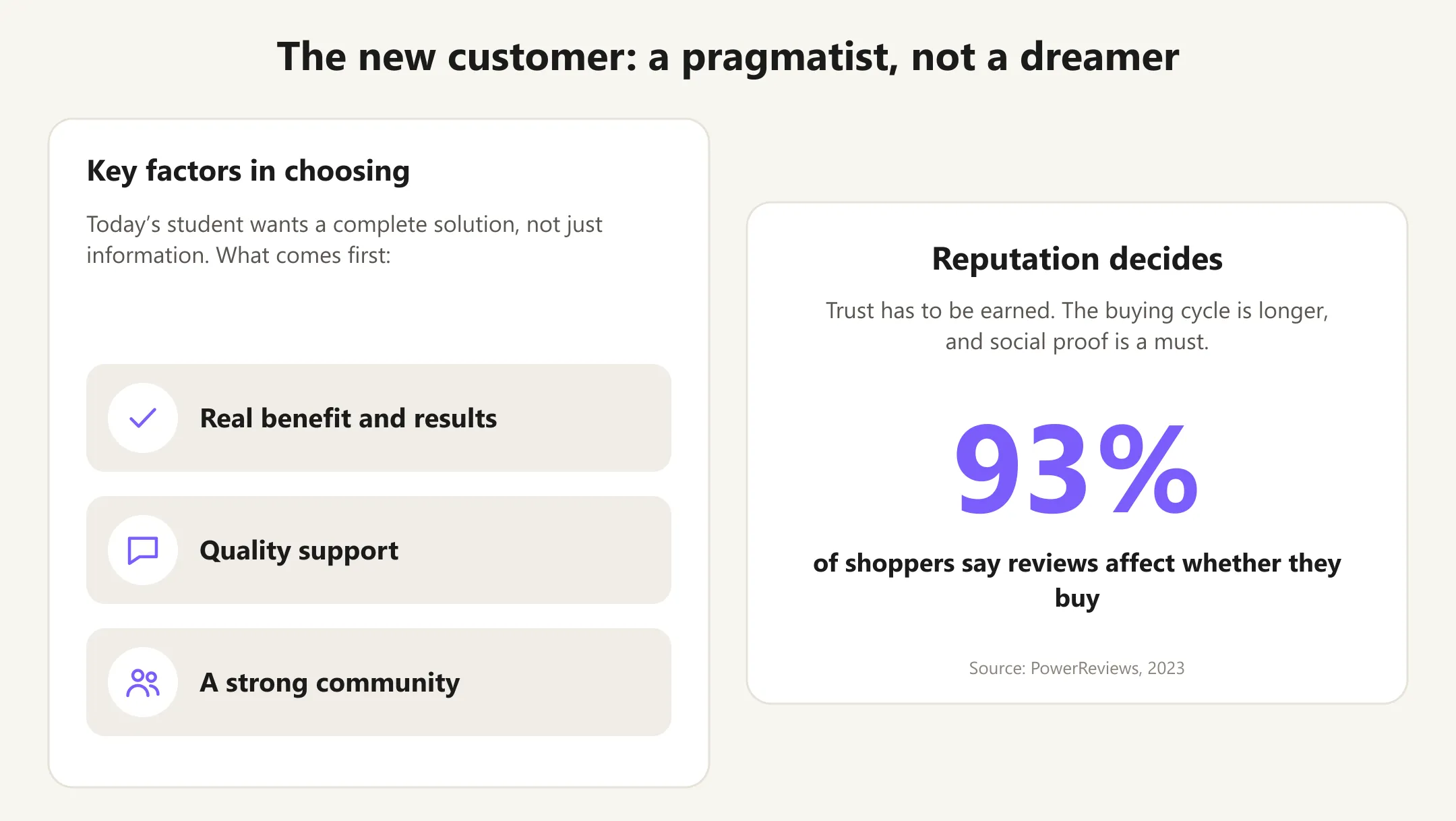
A more considered choice. Buyers in the USA, Canada, the UK and Europe have become pickier about digital learning products. Impulse purchases of courses used to be common. Now the buying cycle is longer: people take more time to decide and study reviews and past students’ results more closely. Buyers still have money but want to spend it wisely. This is a natural result of past courses not meeting expectations, made worse by inflation. Put simply, many people got burned by low-quality courses, and now they look for proof of real value before they buy. Today’s online student expects concrete results and skills from a course, not just “information”. Knowledge is everywhere online and often free, so a paid product must give more — for example, practice, feedback or help applying what you learn. Online courses are usually built to pass on knowledge. But knowledge is cheap now: professionals need practice and mentoring — a mentor, not a book. So people no longer value long lectures without support. They value formats where they can do tasks straight away, get comments on their mistakes and improve their skills step by step.
Higher expectations of quality and format. Buyers now expect more from the way they learn. Their expectations have changed in these ways:
- Length and structure. People prefer shorter, focused courses without excess theory. The market’s motto is “quality over quantity”. People want dense content with a quick payoff, not dozens of hours of filler. Many admit they don’t finish courses because they lack time, so they value brevity and a clear structure. The trend of 2024–2025 is mini-courses and splitting a big programme into short modules.
- Format and delivery. Demand for hybrid formats is steady: self-study materials combined with live sessions. People know that a fully pre-recorded course needs huge self-discipline, so they value live interaction: webinars with Q&A, sessions with the expert, small group workshops. Cohort groups are popular — students go through the programme together on a schedule, which gives accountability and a community of peers. This confirms a general shift: people are tired of learning alone.
- Level of support. Buyers expect service. They expect the course author to be reachable — not personally 24/7, but through tutors, chats or forums. Answers to questions, homework reviews and motivational calls are now reasons to choose a course. If a course has no support at all, many people pass it by. Courses that leave students on their own now struggle. People look for personal help, a mentor and peer-support groups. In contrast, programmes with one-to-one elements (“premium packages” with coaching sessions and feedback) get excellent reviews and high subscription renewals.
- Community. Buyers are drawn to communities built around shared interests. They value not only information but also being among like-minded people. Being able to talk to other students, share wins and problems and learn from others’ experience all adds to a product’s value. An internal community (in Telegram, Discord or a forum on the course platform) greatly increases students’ motivation and satisfaction. This matters even more after the isolation of recent years — people value human contact in learning, even online.
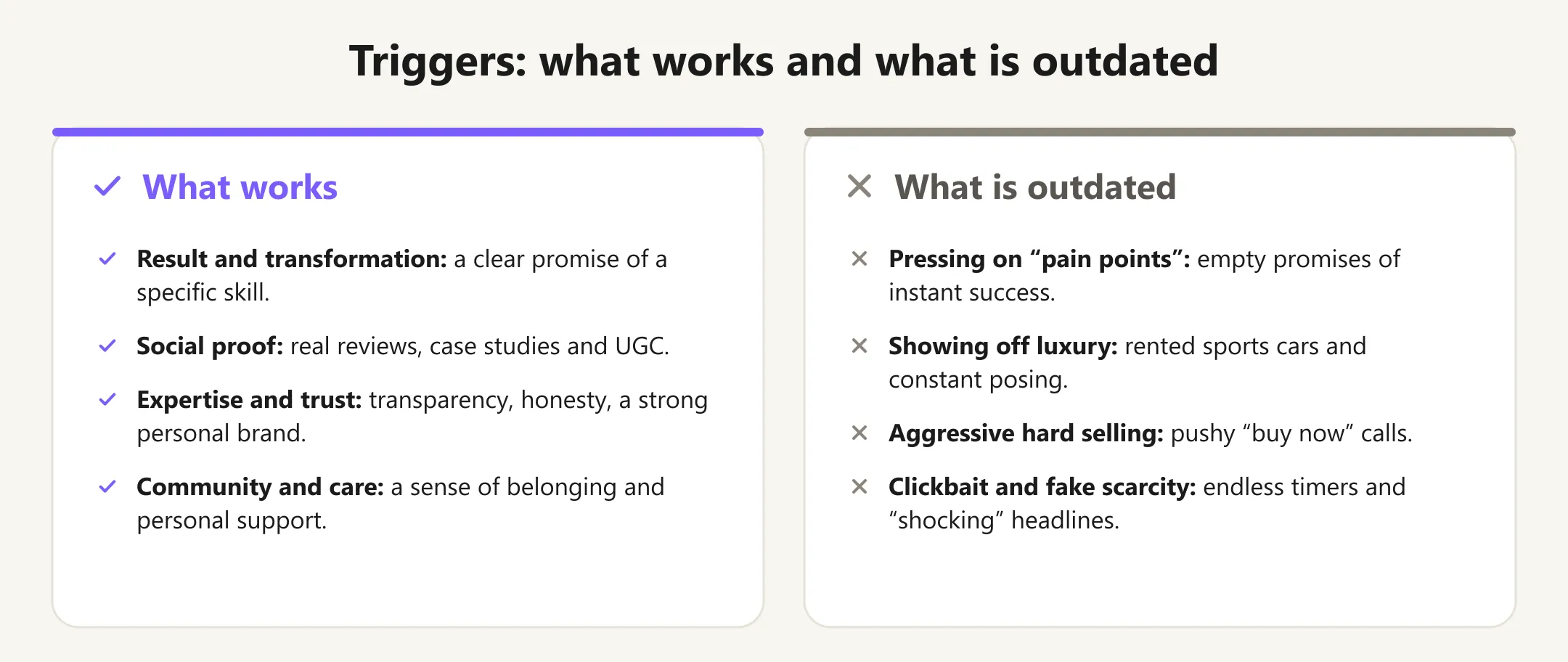
Reason over emotion. Marketing for online courses used to press hard on emotional “pain points” and promise miraculous transformations (“you’ll get rich”, “you’ll find happiness”). Such triggers now work less well on Western buyers. Motivation is shifting: skills are valued above diplomas and certificates. People take a course not for a piece of paper but to gain a practical skill for work, business or personal life. Employers in developed countries look more and more at skills rather than formal education. The boom in online certificates from large companies (Google, Meta and others) helped this along. So people choose courses that will really close a skills gap and show results. Spontaneous “emotional” purchases without a clear idea of the benefit are rarer, because people have had enough of empty promises. In 2025 everyone wants to know exactly what they will gain. It might be a new profession, a higher income, an answer to a personal problem and so on.
Trust and reputation decide. Buying behaviour has changed a lot because of the crisis of trust in the course business. We look at this in the next section. As a result, buyers now check the expert’s reputation and reviews carefully before paying. Most shoppers read reviews before deciding to buy, and 93% say reviews affect whether they buy. So social proof — real student success stories, reviews from verified profiles, independent ratings — is no longer “nice to have”, it is essential. If a course has few reviews, or they look fake, conversion drops sharply. Expectations of transparency are high too. Buyers want to see the course programme before buying, understand the teacher’s qualifications, the real difficulty of the course and the time it takes. Glossy advertising without specifics now raises suspicion straight away among experienced buyers.
Fewer impulse purchases. In the age of TikTok, it might seem that people buy quick courses on a sudden impulse. In developed markets, practice shows the opposite: impulse purchases are falling, especially above €50–100. A person may sign up for a free webinar or lead magnet on a whim, but they don’t open their wallet straight away. It takes several touchpoints. First the person consumes the expert’s free content (posts, videos, a podcast). Only once they are sure of its value do they consider a paid offer. This path has become longer. Marketers note that the audience needs more “warming up”: a series of emails, useful videos, mini-courses or challenges before the sale. One reason is saving money: many people trim their budgets by cutting random expenses. The other is information fatigue: a course must stand out to be bought.
Conclusion: today’s buyer of online learning in the USA and Europe has become more practical and demanding. They are ready to pay, but only for a truly good experience: clear, convenient, effective, supported and trustworthy. For course creators, this means shifting the focus from aggressive selling to building trust and value in the audience’s eyes.
2. Current problems of the course business: fatigue, distrust and competition
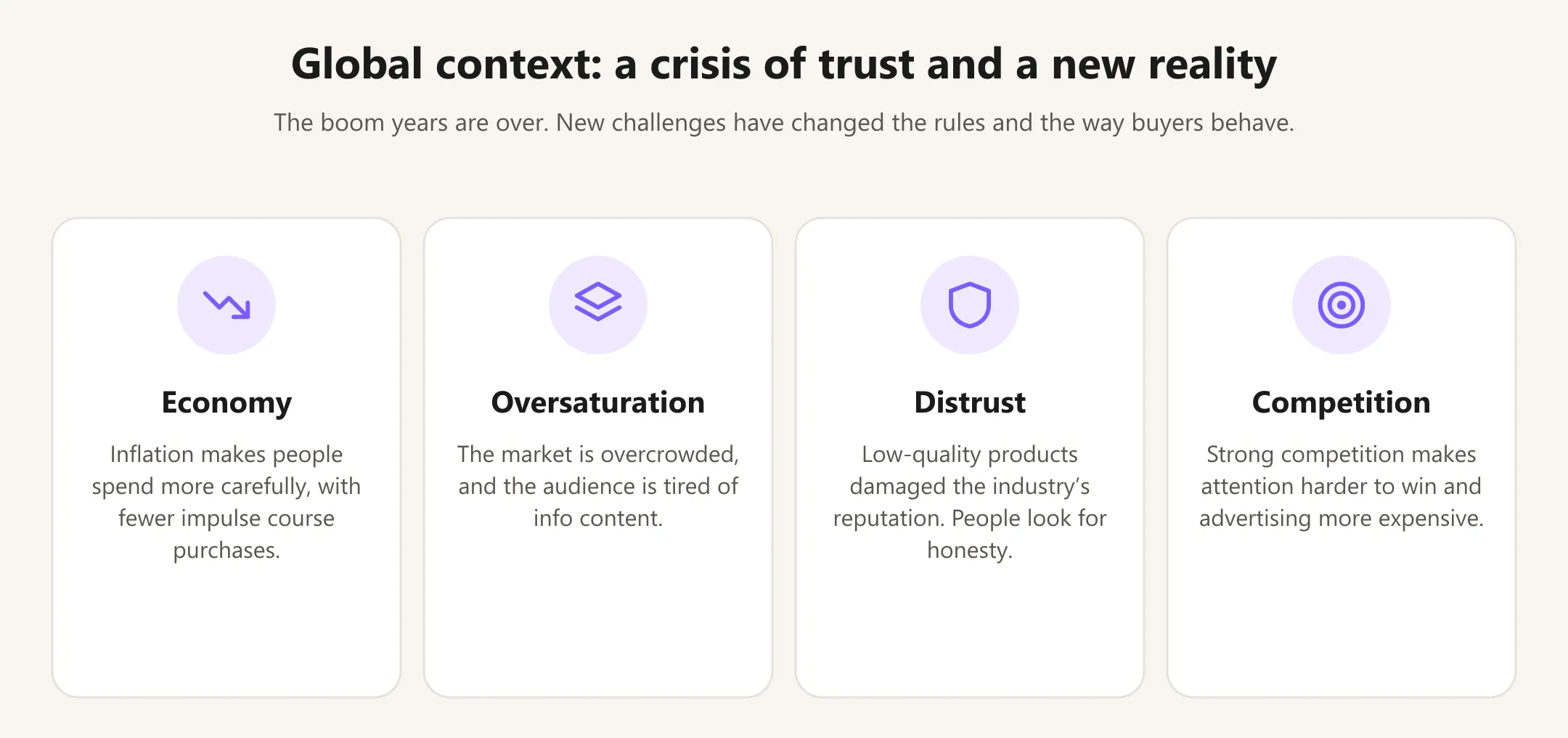
Falling sales after the pandemic boom. In 2022–2023, many course creators in Western markets saw revenue fall compared with the frenzied demand of 2020–2021. Experts call this a “return to normal”. During lockdowns, online course sales soared to record heights, and then inevitably fell back to pre-Covid levels. At first glance this looks like a crisis, although demand has not disappeared — it has just stopped growing at the same pace. Still, many creators feel a “slump”. Only yesterday courses “sold themselves” without much effort, and now they have to work much harder for the same results.
A saturated market and competition. Barriers to entering the course business are low. In recent years a huge number of new players have flooded online education. In the USA and Europe, countless coaches, experts and course schools have appeared on every subject — from finance to spiritual practices. The market is saturated, and buyers have plenty of choice. Every niche fills up with many competing courses. For example, Udemy alone has thousands of courses on popular topics, and on social media it seems everyone is selling or promoting something. So it has become harder to get the audience’s attention. With more competition, advertising costs have risen, organic reach has fallen (more on this later), and there is simply a lot of information noise. To stand out, you now need something extra to win the buyer over. Average, ordinary courses no longer sell as easily as before, because people have an alternative one click away.
Audience fatigue with info content. In recent years, people have taken in a huge number of webinars, intensives and online marathons. Many feel “digital fatigue” — tiredness from so much online learning. Social media is full of ads for yet another “free marathon”, which now meet with scepticism. As a result, interest is harder to hold. Potential buyers are less engaged in free warm-up content, and many don’t watch webinars to the end because they have “seen it all before”. People have had their fill of the format. Look-alike courses no longer excite the audience; they need new value.
A crisis of trust. The mass boom of the course business had a side effect. Many low-quality products and outright scammers appeared, which damaged buyers’ trust. In English-speaking countries, criticism of scam courses is getting louder. In 2023, several widely discussed articles described people spending thousands on online courses and getting no results. Social media filled with negativity: exposés of fake gurus, jokey videos about “I took an online course and got scammed”. All this makes the wider public sceptical of all such offers. The crisis of trust shows in buying behaviour: buyers doubt whether to believe the author’s promises and wonder if there is a catch. For example, typical course-marketing tricks (showing off the coach’s luxury lifestyle, “buy now” countdown timers and so on) work less well. People recognise them and react badly. In essence, buyers are tired of hype and want honesty. Trends confirm this. Course creators note that it is now vital to be transparent and ethical in marketing and not to make empty promises. Otherwise your reputation won’t survive.
Classic funnels are failing. In many niches, a standard sequence used to work: aggressive ads → a free webinar ending in a pitch → quick course sales. Now this model performs worse. Webinar attendance is falling, conversion from webinars has dropped, and longer chains of touchpoints are needed. Many course creators have found that their usual automated funnels “fell short of their KPIs”. Scripts need to be adapted to the new reality. The audience is colder, and that is a challenge, especially for those used to easy sales. They have to learn new warm-up strategies, rebuild their content strategy and find a new way to reach the customer. Those who don’t adapt see their sales fall sharply.
How are creators responding? Forward-thinking online entrepreneurs are already taking steps to overcome these problems:
- Differentiation and value. Seeing that the market is saturated, they invest in making their product unique and truly valuable. They add practice, turn courses into “skill-based” programmes, invite guest experts and update content to current needs. The bet is on results for the customer — then, even in a noisy market, word of mouth will bring new students.
- More support and engagement. To fight audience fatigue, many authors now offer more live contact and personalisation. As mentioned, they add mentors, group calls and community chats. This brings back trust: the student feels cared for, not like they just bought “a recording, and goodbye”. Of course, this is hard to scale, but that is the trend: adding a “human touch” to a digital product.
- Transparency and honest marketing. To win back trust, many now talk openly about what their products contain and what they don’t. They honestly list what their course won’t teach, how much effort the student will need and what results are realistic. There are no fairy tales about millions tomorrow. They back everything up with real graduate stories and progress figures. There is even a term, “ethical launch”, meaning a launch without manipulative promotion tricks. This helps win back the audience’s respect: people see the expert as a reliable professional, not a pushy seller.
- Rethinking pricing and products. Some introduce more flexible prices. For example, there may be a cheaper light version of a course, or a more expensive VIP package with personal work. Many make more use of instalments and subscriptions, to lower the entry barrier for those short of money. This partly offsets inflation: instead of one large sum, buyers more readily agree to pay monthly. With so much competition, creators also often offer discounts for the first cohorts and money-back guarantees. This lowers the buyer’s risk and wins over the doubters.
- Moving into related formats or niches. Some course creators, facing falling interest, pivot. For example, they switch from selling to individuals to corporate training, where demand is more stable (companies pay to train their staff). Others move into consulting or agency services, using their expertise differently. So there is some redistribution: not everyone can stay afloat on courses alone, and many have to diversify their income.
Creators are burning out. Notably, the “crisis of 2020–2023” hurts not only students but course creators themselves. In surveys, many creators report burnout. After several years of racing, many run out of steam. Some sell their business, some take a break, and some close projects altogether (even very profitable ones). The reasons are emotional exhaustion and the much-discussed post-2020 exhaustion (the stress and overload of the pandemic years are now taking their toll). As a result, some big names leave the market. This opens niches for new players, but it is also a signal. Working the old way is now hard, and a different, more sustainable model is needed (more on this below). Overall, the course business is at a turning point that calls for rethinking values and methods.
3. Promising models and formats: what works in 2025–2030
Despite the difficulties, online education is not standing still. On the contrary, it is actively experimenting with new ways to earn money and new product formats, trying to meet the audience’s changed needs. Let’s look at the most promising approaches that show good results in English-speaking markets.
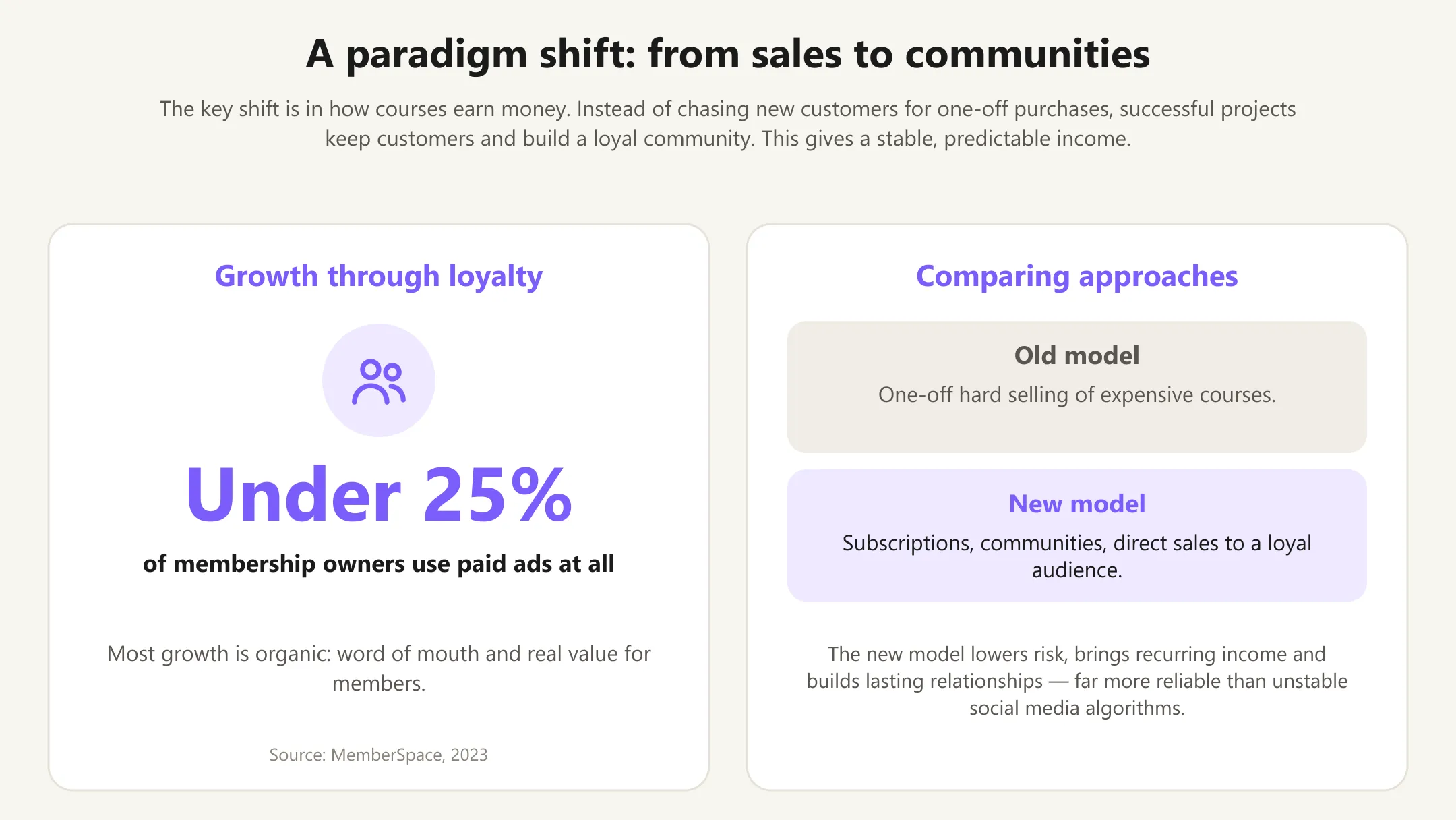
Subscriptions and membership communities. The subscription (membership) model is gaining popularity as a stable source of income for experts. Instead of one-off course sales, creators offer a monthly subscription with ongoing value: a library of materials, regular meetings, a community and so on. Examples are Patreon pages, interest clubs and closed groups with a monthly fee, sometimes giving access to all of an author’s courses. Why does it work? For buyers, a small monthly sum is less painful than paying €500 at once, and they feel they get continuous support and updates. For the business, it means recurring income and a closer relationship with the audience. A 2023 study showed that fewer than 25% of membership owners use paid ads at all — most growth is organic, thanks to members’ loyalty. So a well-built community largely sustains itself. Of course, the subscription model requires constant new content and keeping people interested, but done right, it gives stability. Success stories include English-speaking creators in DIY and crafts. Instead of selling single workshops, they opened a “virtual club” with new lessons every month and live contact. Many members stay in such clubs for years, giving the author a predictable income.
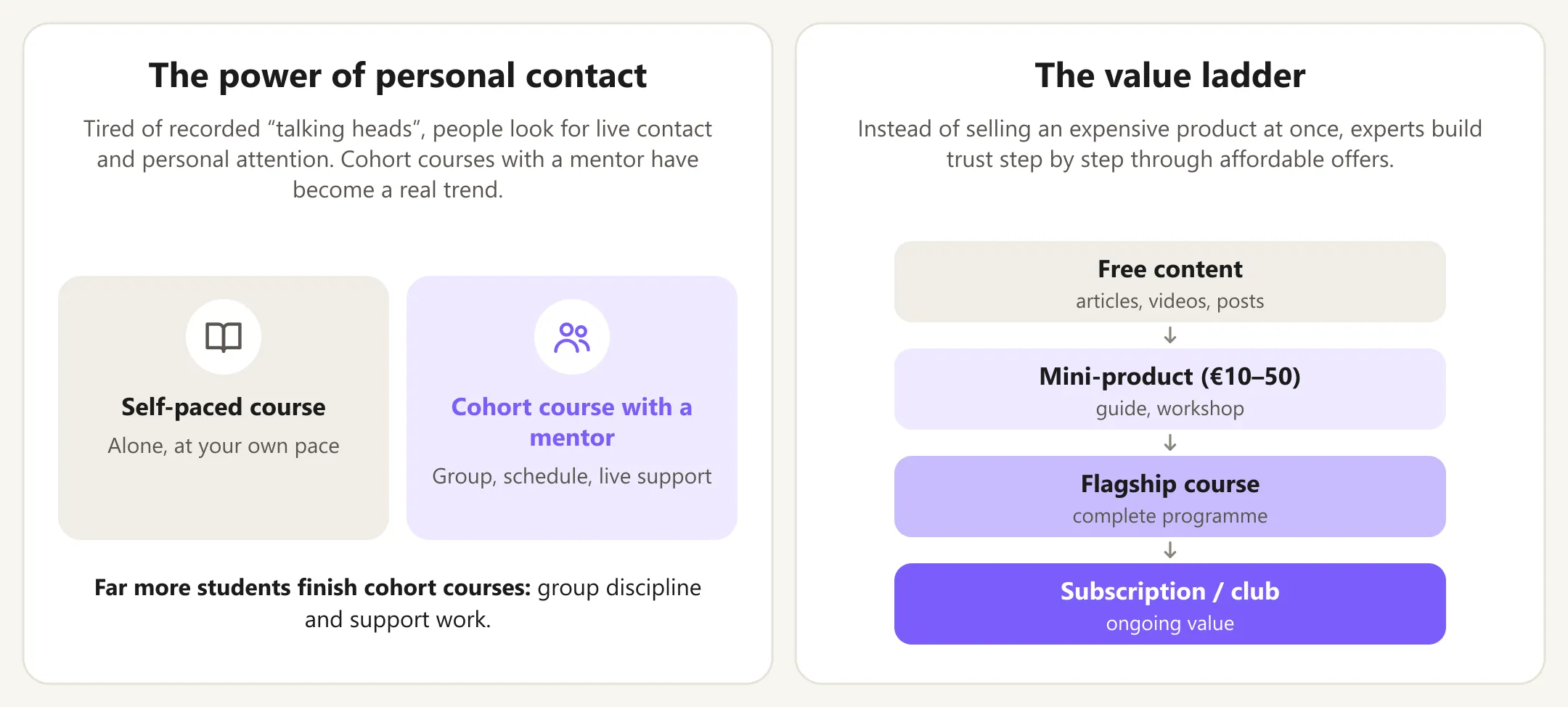
Personalised learning and live mentoring. As noted, people look for personal contact. So cohort-based courses (courses where a group starts on set dates) have become a real trend. They usually last several weeks and run on a schedule. All participants go through the material together, and the expert runs weekly live sessions, answers questions and can adjust the programme “on the go”. In essence, it combines the best of offline learning (discipline, a group) with online access. One example is Maven, a platform where well-known specialists teach cohort courses. Engagement is much better: far more students finish them than finish self-paced courses. For the creator, this is a chance to charge more (since personal work is added) and to collect strong student success stories. Live mentoring also takes the form of group coaching. Instead of a recorded course, the coach sells, say, an 8-week programme with weekly group calls and tasks. Clients get structure, some individual attention and group support. Such programmes often cost more (several thousand euros), but courses with personal attention are the ones selling best now.
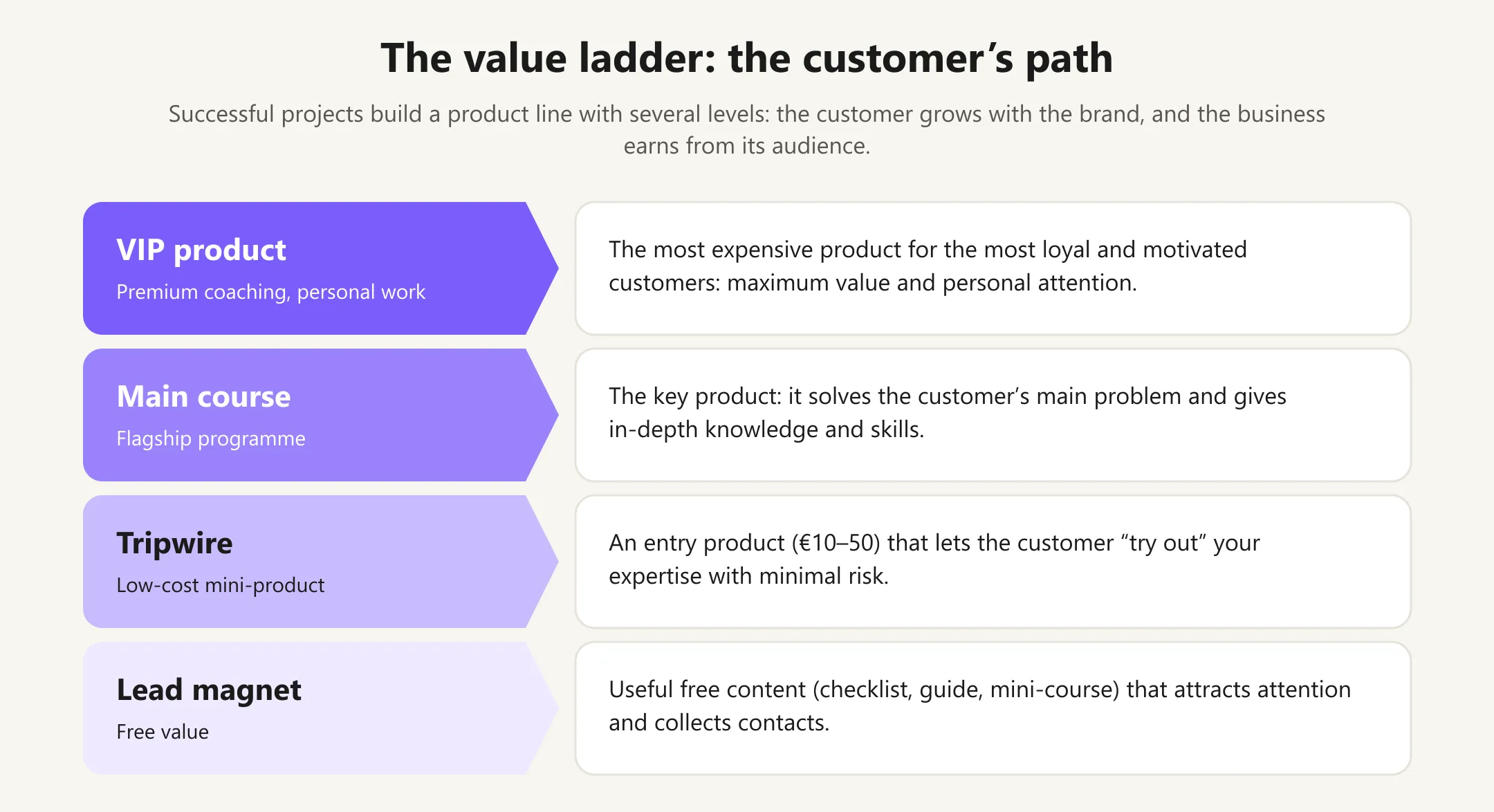
Mini-products and low-barrier offers. In response to buyers’ caution, mini-courses and micro-products have spread. They are something valuable but small and cheap, so a newcomer can “try out” the expert. This could be a short 1–2-hour video course on a narrow topic, or a checklist or guide. It could also be a short workshop recording, a trial module of the main course and so on. The price is roughly €10–50. The goal is to remove objections for those not ready to invest a large sum at once. The buyer purchases a mini-product, sees the quality and gets a small win. They are then more likely to buy the flagship course or join a subscription. This creates a value ladder: from free content → to a cheap product → to an expensive one. Many Western marketers use this strategy, and it works. They don’t try to sell a €1,000 course to a stranger straight away. Instead, they first sell them something for €19, earn their trust, and only then upsell the main offer. In the current economy this makes sense and works better than selling expensive packages head-on.
Hybrid programmes (blended learning). Another trend is mixing formats: online courses are combined with offline elements or hands-on practice. For example, a photography course may include not only webinars but also an in-person workshop or a photo tour for graduates. Business trainers now hold live retreats and conferences for their online students, to strengthen the community. In language learning, self-study on a platform is combined with video lessons with a tutor. This hybrid approach adds value — people get the best of both worlds. Of course, it takes more organising, but it also allows a more premium price. Sometimes a purely digital product is hard to sell at a high price. Then adding physical meetings or personal coaching justifies the price in the buyer’s eyes.
Long-term programmes and product series. There is a trend away from one-off courses towards long development programmes. For example, instead of a 2-month course, the author offers a one-year learning path. First comes a basic module, then an advanced one, then a master group — a kind of “learning ecosystem”. This increases customer lifetime value: the student doesn’t leave after one course but stays to keep learning. For students, the plus is that they see room to grow and know where to go after the beginner level. Marketing often says exactly this: “After this course, you can move on to the next level of the programme”. Some large course schools in Western markets have built their product line this way. They attract people with a free intro course, then a paid basic one, then an advanced one, then exclusive coaching. This strategy lets you earn from a customer continuously rather than once — which is what experts advise.
Extra services: consultations, mentoring, job support. To add value, course products are turned into a complete offer. For example, besides learning materials, a course includes personal consultations with the expert (or their assistants) for individual questions. Or mentoring after the main programme — a graduate gets 3 more months of mentor support in applying the knowledge. In professional niches (IT, design), job support is more and more common. The school helps write a CV, prepares students for interviews and sometimes even gives access to partners’ vacancies. All this builds trust and the wish to buy this particular course. The benefits are clear and tangible (for example: “We’ll get you to your first job in your new profession”). Of course, promises must be backed by real cases, or it is just empty marketing. But those who really build such ecosystems with consulting and career support now lead the market.
Direct sales, bypassing platforms. Some creators build an audience of millions and then earn from ads or brand deals. For course creators, this kind of earning through ads and sponsorship is becoming less important. First, social networks cut reach (it is harder to reach a million). Second, ad rates are falling, and it is an unpredictable source of income. So more and more experts aim for direct sales of their own products to loyal fans, rather than earning through ads. An influencer is not a course creator. The first makes content and hopes the platform and brands will pay. The second creates a product and sells it directly to the audience. Many bloggers now retrain as experts with paid products, because it is more reliable. A YouTube channel with a million subscribers may bring unstable income, because algorithms change. By contrast, 1,000 loyal clients paying you directly are a far more stable asset. There is a trend towards building your own media brand. A creator positions themselves not just as an entertainment blogger but as an expert. They have a media project (podcasts, articles, events) and their own products built around them.
An example to illustrate: in recent years, the education platform Mindvalley (USA) has moved to a subscription and community model. It no longer sells separate self-development courses. Instead, it created one membership for its programmes, launched a mobile app with daily practices and built a strong community forum. This keeps the audience for a long time. Another example: LinkedIn Learning offers companies a subscription for their staff — thousands of short courses on soft skills for a fixed yearly fee. This model also thrives in B2B, because it is easier for companies to pay for a subscription than to approve each course separately.
New technology. New technologies are also entering online education and shaping its formats. In 2024 people started talking about using AI in courses. One example is GPT-based chatbots that support students 24/7 and help answer common questions about the material. This solves the problem that an expert can’t always be available. An AI assistant points to the right lesson or explains a concept while the author sleeps. AR/VR for immersive learning (virtual simulators, simulations) is also discussed. But this is more the future and is not widely used yet because of the cost. AI, however, is already used by some creators to automate routine work. Examples are transcribing and translating videos, personalised lesson recommendations based on a student’s progress, and even generating practical tasks. All this makes online courses more adaptive and personal. The key is a balance of automation and human contact. AI takes care of technical matters, while the live expert focuses on motivation, communication and passion. In the end, a combined “people + technology” approach sets a new standard of quality for learning products.
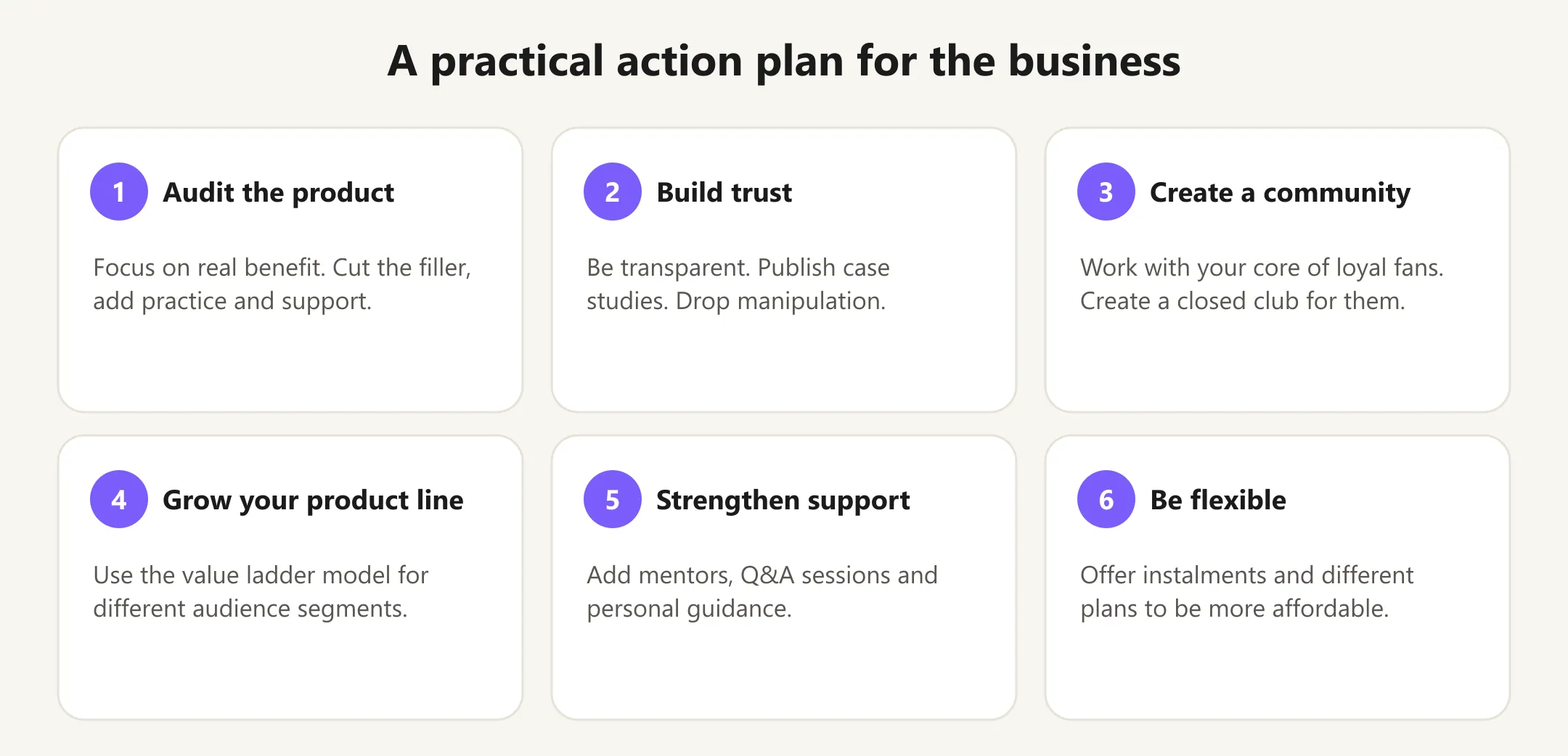
To sum up, promising course-business models are now built around more value and flexibility for the customer. Successful players don’t push the same long course on everyone. Instead, they offer a choice of formats (self-paced, with a mentor, in a group), flexible payment terms, ongoing support and a path to grow. The thinking is shifting from a one-off sale to a long-term relationship with the audience. Income comes through different channels (subscriptions, upsells, events), and the customer feels part of a community and gets value all the time.
4. Promotion strategies: what works and what is out of date
Promoting courses is perhaps the area that changes fastest under the influence of social media and audience behaviour. Let’s look at current approaches to social media and content marketing for online education niches, and at what is becoming a thing of the past.
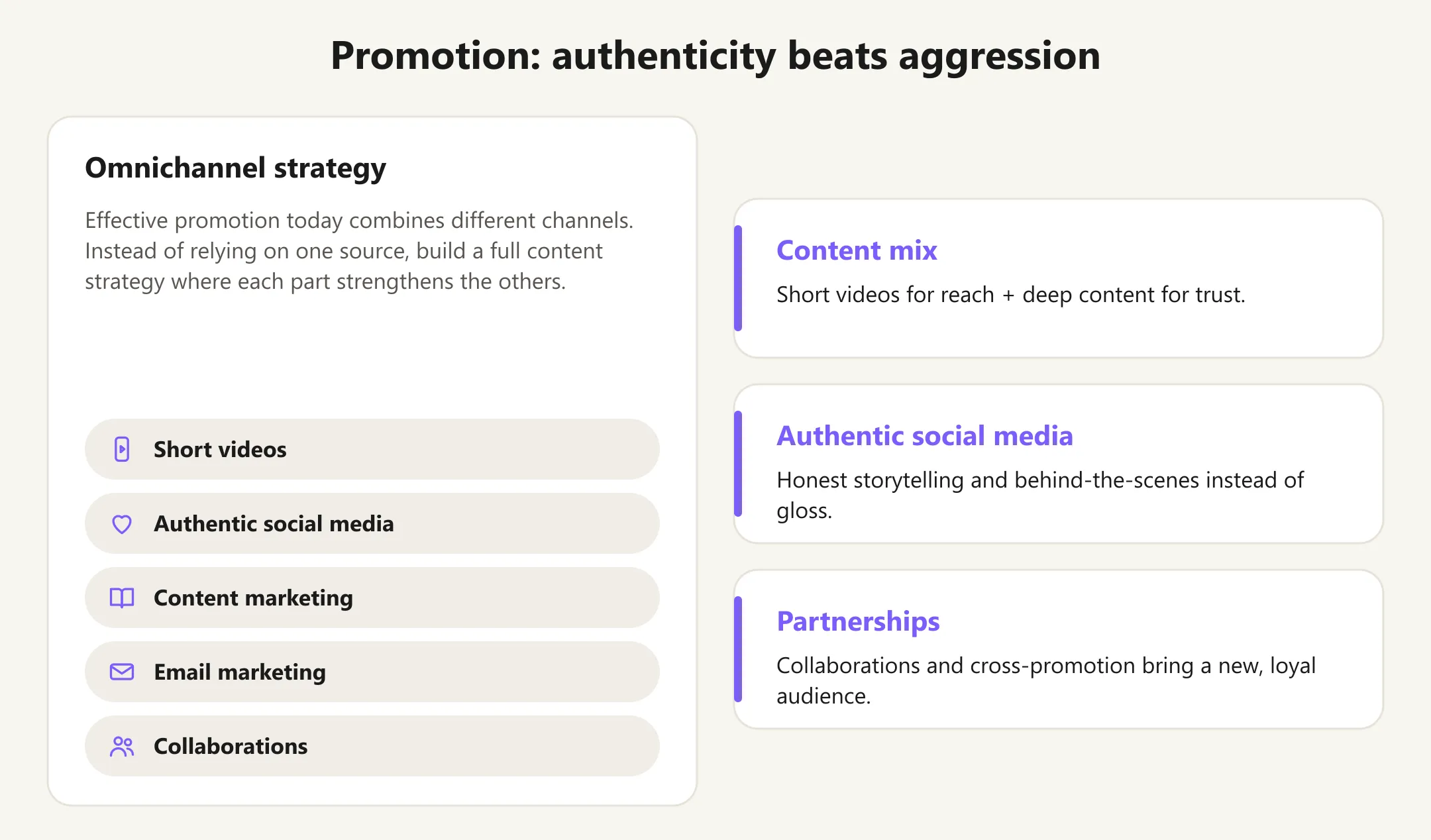
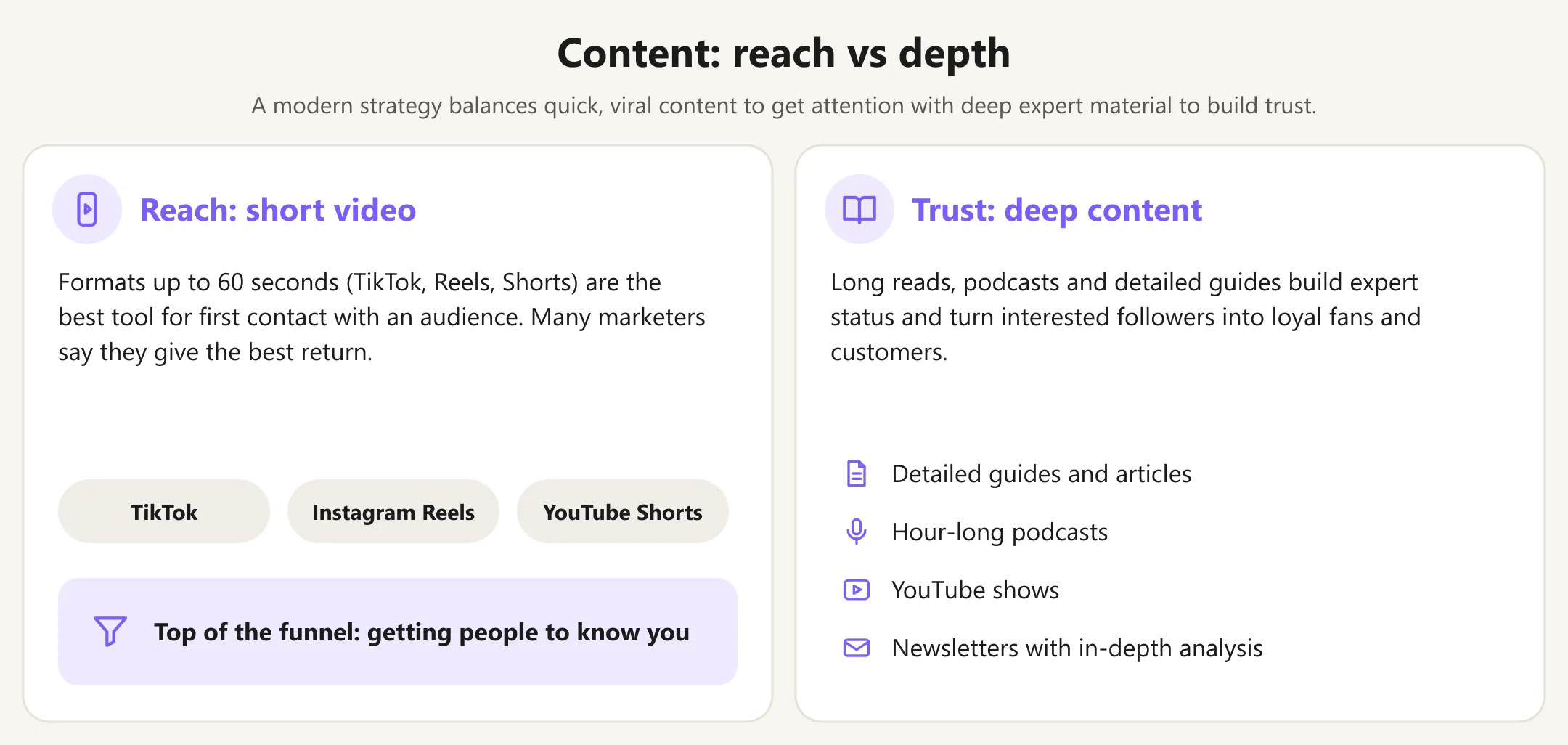
Short video is king. Short-form video (short vertical videos up to 60 seconds) remains the main social media trend. Many marketers say short videos give them the best return of all content formats, and plan to invest in them most in 2025. For promoting learning products, this means that TikTok, Instagram Reels, YouTube Shorts and similar formats are a powerful way to get attention. Creators who have learned to pack a valuable micro-tip or insight into a lively 30-second video get millions of views and crowds of new followers. In the English-speaking course business, there are cases where an unknown teacher built an audience through a series of viral TikToks on their topic. Then the teacher launched a successful course. Short-form content works well at the top of the funnel — to get people to know you. But remember: liking a video is one thing, buying a course is another. So short videos plus further warm-up have become the standard. Short videos bring traffic and spark interest. Then the author moves the audience to a longer format (for example, a YouTube channel, a webinar or a newsletter). There they go deeper and sell. What is out of date is ignoring this format. Those who still rely only on text posts on Facebook or static images lose reach, because the algorithms clearly favour video.
A shift to deeper content. Interestingly, alongside the boom in short videos, long content is having a revival among those building an expert brand. Why? Short clips get attention, but trust and expert status are best built through long reads, hour-long podcasts and detailed guides. People who are really interested in a topic will read or watch longer content, and that is where they become convinced of the author’s skill. That is why many course creators start YouTube shows and podcasts, write articles on Medium or send newsletters with in-depth analysis. Such content filters out casual visitors but turns interested people into fans. In 2024 the trend is clear: quality and meaning of content matter more than chasing likes. The focus is on value and connection with the audience, instead of an endless “race for engagement”. This means an expert’s success is measured less by views than by the number of people who really benefited and began to trust them. So posting clickable but empty posts for reach is going out of date. Algorithms are changing too: for example, LinkedIn and Facebook have started to prioritise posts that hold attention (that is, longer, more substantial ones). The practical takeaway: the combination that works is short videos for first reach + long content (video or text) to build a loyal core.
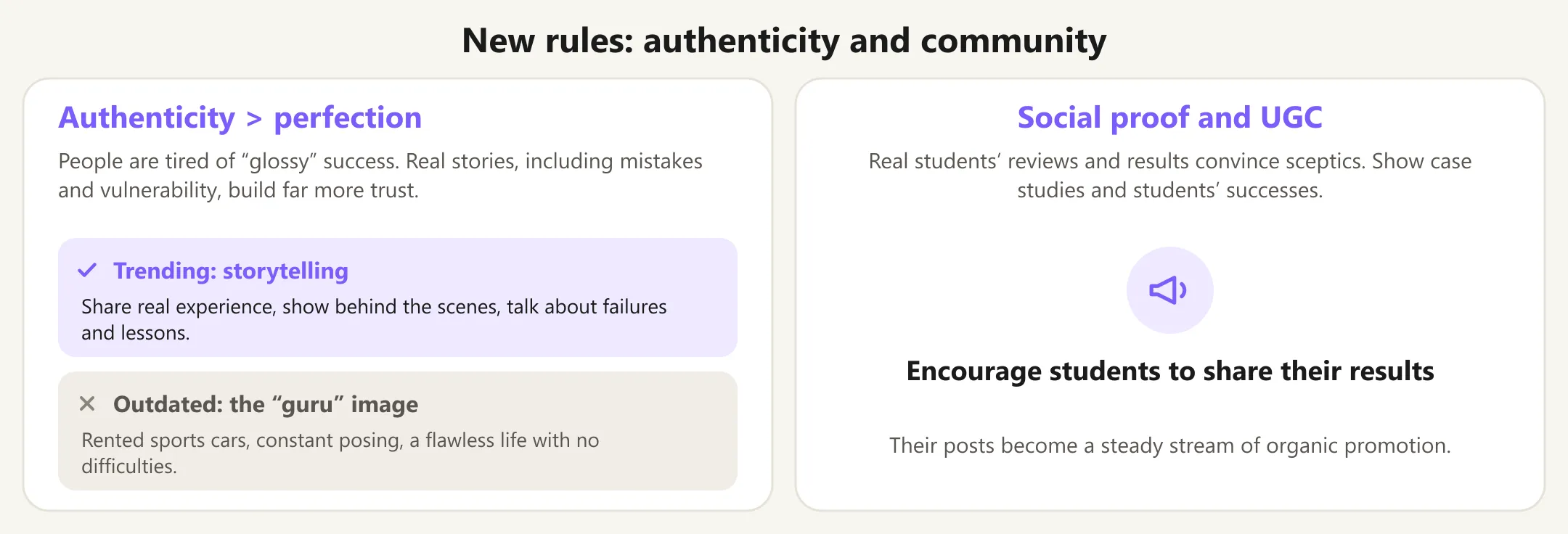
Authentic social media vs. glossy social media. The audience values authenticity. This is a global social media trend. People are tired of the polished, perfect image of experts and want to see real people with their expertise and their vulnerability. So a more human tone works in promoting courses. The author shares not only successes but also mistakes, and tells real stories (including ones where something went wrong and how they overcame it). Such content earns more trust than a flawless “look what a guru I am” picture. So the showy image of a course seller with a rented sports car and constant posing is going out of date. Today’s Western audience is more likely to laugh at it. Storytelling and personal brand come to the fore. The expert promotes not only the product but also themselves — through stories, their view of the world and their values. This brings them closer to the audience and creates an emotional bond, which in the end helps sales.
The role of paid advertising. Targeted ads on Facebook/Instagram and Google remain an important channel for leads. But they work less well than in previous years. The causes are more competition (feeds are full of course ads) and targeting problems after privacy updates (for example, tracking limits on iOS). The cost per lead has risen. So budgets are being moved: more attention goes to organic channels and collaborations, and paid ads are used more precisely. For example, ads don’t ask a cold audience to buy straight away. Instead, they invite people to sign up for a free product (a lead magnet), so they can be warmed up by email. Or retargeting is used to reach people who already know the brand, to close the sale. Put simply, ads have become part of a complete strategy, not a magic button of “bring traffic — get sales”. Those who used to rely only on Facebook Ads are now learning content marketing, SEO and PR.
Email marketing is back. Email, though seen as an “old-timer” in marketing, is being valued anew. Social platforms are less reliable (reach is falling, accounts can be blocked), so experts are building up their email lists. The advantage of email is that you own the contacts and can send long explanations directly to a person’s inbox. In a social feed, a message gets lost in the stream. Emails are more likely to reach people (not everyone will open them, but a loyal audience opens a large share). Now many people offer free useful things in exchange for an email address (checklists, mini-courses). Then they build email funnels: a series of emails with value, case studies and warm-up, ending with an offer to buy. A well-made series like this can bring steady sales on autopilot. Of course, the newsletter must be valuable, not pushy — otherwise people will unsubscribe. The personalisation trend shows here too. Examples are segmenting the list and sending different emails depending on the subscriber’s interests. There are also trigger chains based on actions (opened an email — got the next part; didn’t open — got another, and so on). CRM automation tools (ActiveCampaign, HubSpot, GetResponse and others) let even small businesses do this. Overall, email marketing is back in fashion as an antidote to the unpredictability of social media.
TikTok and Reels for organic reach. Despite content fatigue, you can’t ignore viral platforms entirely. TikTok keeps turning nobodies into stars. Its algorithms can show your video to thousands of people even if you have no followers, as long as the content hooks them. Many language teachers, for example, got an influx of students thanks to funny TikTok sketches about learning languages. YouTube Shorts are also starting to bring viewers to channels. Instagram Reels are now almost a must-have format for an account to grow. But there is a catch: you need to adapt the content to each platform. What works on TikTok (super-fast trending memes) may not suit a more professional audience on LinkedIn or YouTube. Marketers advise reposting content: for example, you film one vertical video and, with small edits, use it on TikTok, Instagram and YouTube Shorts. This increases reach with minimal extra work.
SEO and content marketing. Good old search traffic also brings customers, especially in niches where people google answers to their problems. In 2024 SEO is still relevant. Many experts run blogs that answer popular queries (“how to learn UX design from scratch” and so on). They promote these articles in search and use them to bring people to their products. True, competing with large content platforms is hard, and SEO is a long game. Still, targeted strategies work. For example, a course landing page is optimised for the query “online [topic] course with certificate”. If it reaches the top in its region, it brings steady sales. YouTube videos are also part of SEO (YouTube is the second-largest search engine). Many people make tutorial videos with keywords in the titles, and this way they gather targeted viewers whom they later convert.
Social proof and UGC. In promoting courses, it is now vital to show students’ reviews and successes (social proof). A couple of quotes on a landing page used to be enough; now it is not — people want to see real stories over time. So user-generated content (UGC) is used: students are encouraged to share their results on social media. For example, participants post “I took course X, here’s what I learned” and tag the author. This works better than any ad, because it is an honest review from a real person. Platforms like LinkedIn even have a special “Licenses & Certifications” section, where graduates can add a course certificate. This is also visible social proof (a potential buyer sees how many people already have this certificate). Marketers advise building review collection into the process itself. After the course, ask students for a video review, hold case-study contests among graduates and so on. Large players show that case studies are powerful promotional content. For example, Coursera regularly tells stories in its newsletters about students who changed careers thanks to its courses. These are backed by figures (a salary rise of X% and so on). Such content convinces sceptics better than a dozen advertising promises.
Collaborations and partnerships. With advertising so expensive for one creator alone, partner launches and collaborations are coming back to the fore. This can be cross-promotion with another expert whose audience is related. For example, a career coach runs a joint live stream with a public-speaking expert — related topics, and they exchange audiences. Or course creators hold an online conference or summit together, bringing in their communities. An affiliate programme is also popular: the course author pays a commission (20–50%) to partners who bring in paying students through their recommendations. This is common in English-speaking markets: there are whole affiliate networks ready to promote your course for a percentage of each sale. What is out of date is promoting yourself alone, in isolation. Now the winning approach is “win-win” cooperation. For example, large learning platforms (Udemy, Skillshare) let independent authors reach their audience, though for a share of the income. Local schools team up to create a more attractive set of offers. For example, you buy the main course and get a partner’s mini-course as a bonus. Mutual mentions in podcasts and guest blog posts are also coming back as an effective way to grow reach without direct costs.
Social media approaches that are losing effectiveness:
- Clickbait and aggressive hard selling. As noted, the audience has become smarter and reacts badly to clickbait (“shock! sensation!”) and blatant “buy now” spam. Today this style is more likely to harm your reputation. Educational marketing works much better: the content itself already gives value, and the product is sold gently as the logical next step.
- Focusing only on vanity metrics. Chasing followers and likes is pointless if those followers don’t convert. Many micro-influencers with 5,000–10,000 very engaged followers earn more than accounts with a million bots. So measuring social media success only by reach is out of date; the quality of the audience matters.
- Template, look-alike formats. For example, template sales webinars of the “45 minutes of value, 15 minutes of hard sell” kind — everyone has seen them already. Or landing pages with loud headlines like “Earn €100k in a month” — they make people laugh. Ignoring mobile formats is also going out of date. Content must now be mobile-first (most people read and watch on their phones). So long PDF presentations not adapted to smartphones belong to the past.
What large players do: large online schools in the USA (for example, Udacity, edX) invest heavily in content marketing and SEO. They also publish research and run free webinars with real value to attract an audience. Niche players without such resources win with the founder’s personal brand. The school’s CEO is active on social media, appears on podcasts and shares expert opinions. People start to trust them, and through that they come to the company’s products. Everyone has also noticed the trend of short expert videos on LinkedIn and X (formerly Twitter). Even heads of large EdTech companies post short video tips to increase reach, following the general social media trend.
In total, the promotion strategy for 2025+ looks like this. It uses a multichannel (omnichannel) approach and a mix of short viral content and deep expert content. It focuses on trust through stories and proof, and on partnerships rather than only paid ads. It also needs active community involvement (UGC). All this helps fight falling organic reach and build an audience that won’t just scroll past your post but will become a regular student.
5. Sales funnels and automation: new models and mistakes
Evergreen vs. launches. Course marketers have long debated a dilemma: sell courses all the time (evergreen) or through periodic launches (cohort launches). In 2024 it became clear that both approaches work, with nuances. Many experts lean towards a hybrid model. The main flagship programmes are sold through limited launches several times a year (creating a buzz). Smaller products and subscriptions are sold through an evergreen funnel all year round. Practice shows that “scarcity” (a limited enrolment window) really does drive sales — people don’t put off the decision.
However, relying only on launches is risky: if someone misses the window, they may go to a competitor. So it is important to have a way to capture people who are interested outside the sales period. You need to give value for free (for example, through webinars and mini-courses). Then a potential customer waits for the next launch rather than leaving.
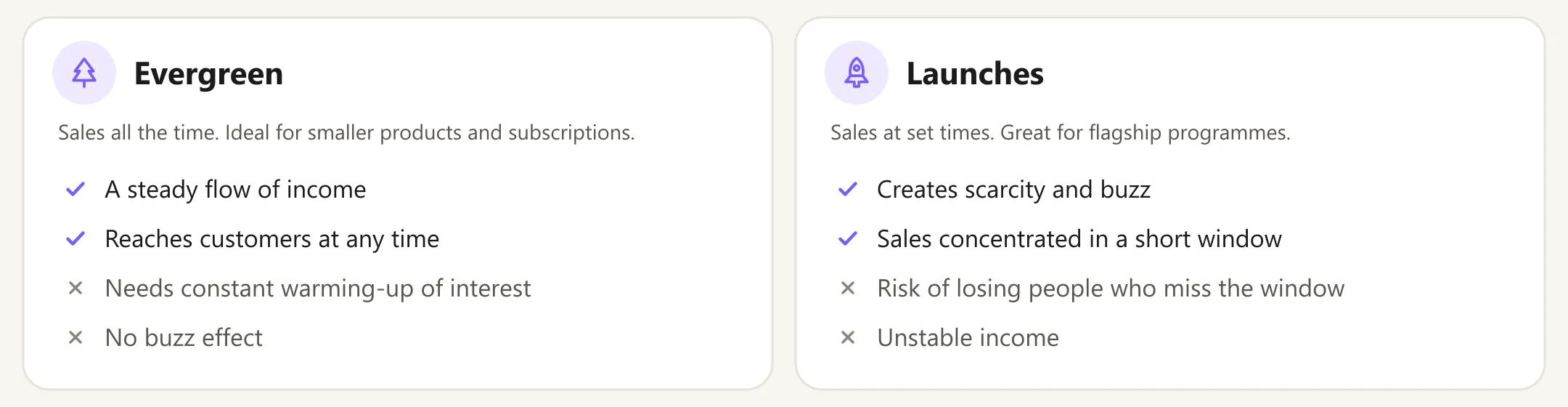
For evergreen funnels, the main challenge is to keep interest without a deadline. Marketing tricks help here: special bonuses and limited offers inside the evergreen model. For example, a person signs up for a newsletter. Then a personal offer starts just for them: “buy within 5 days with a discount or bonus”. Technically this is evergreen (each new subscriber triggers their own sequence), but psychologically it creates the effect of a launch. Another key point is to keep mentioning your course in your content. A common mistake of those who try evergreen is that they forget to tell their audience about the course regularly, for fear of seeming pushy. As a result, people simply don’t know about the product. Takeaway: an automated funnel must be backed by active promotion, novelty and news. If a course is always on sale, find ways to refresh how you present it from time to time. Add new modules, announce a “Christmas discount” or share fresh reviews. Something new gets attention — even inside an evergreen model, you need to create a sense of novelty.
Tools and platforms. To build automated funnels, creators make heavy use of specialised all-in-one platforms (Kajabi, Thinkific and others). These link landing pages, payments, email newsletters and an LMS into one system. In English-speaking markets, ClickFunnels and LeadPages are popular for quickly building high-converting landing pages, and ActiveCampaign or ConvertKit for email series. Many are moving to a CRM for small businesses (for example, HubSpot’s free plan) to track each lead’s path and not lose interested people. New tools are appearing too, in particular platforms for chat funnels (via Facebook Messenger, WhatsApp or Telegram). In these, a bot leads the user through a chain of questions and offers. This matches the trend that people spend more and more time in messaging apps and may not read email.
Automation vs. manual work. A modern funnel combines automatic chains with points of manual contact. A fully automatic scheme (the customer came and bought without talking to a person) works mainly for cheap products. If a product is expensive or needs trust, an element of live contact is often needed. For example, at the final stage of the funnel, a manager or the author may contact a warm lead personally. They hold a free consultation and answer the last questions. Many course creators add a sales-call stage for high-ticket programmes (one-to-one coaching, expensive courses). The person applies, gets a call, gets to know the team, and conversion after such a conversation is very high. Yes, it doesn’t scale like an automated email, but with an average order of €2,000+ it is worth it. Manual work is also needed in communities and warm-up. Even if the emails are automatic, the community chat has live moderation, the expert goes live and so on. Automating routine touchpoints is great, but the human factor remains critical for building an emotional bond.
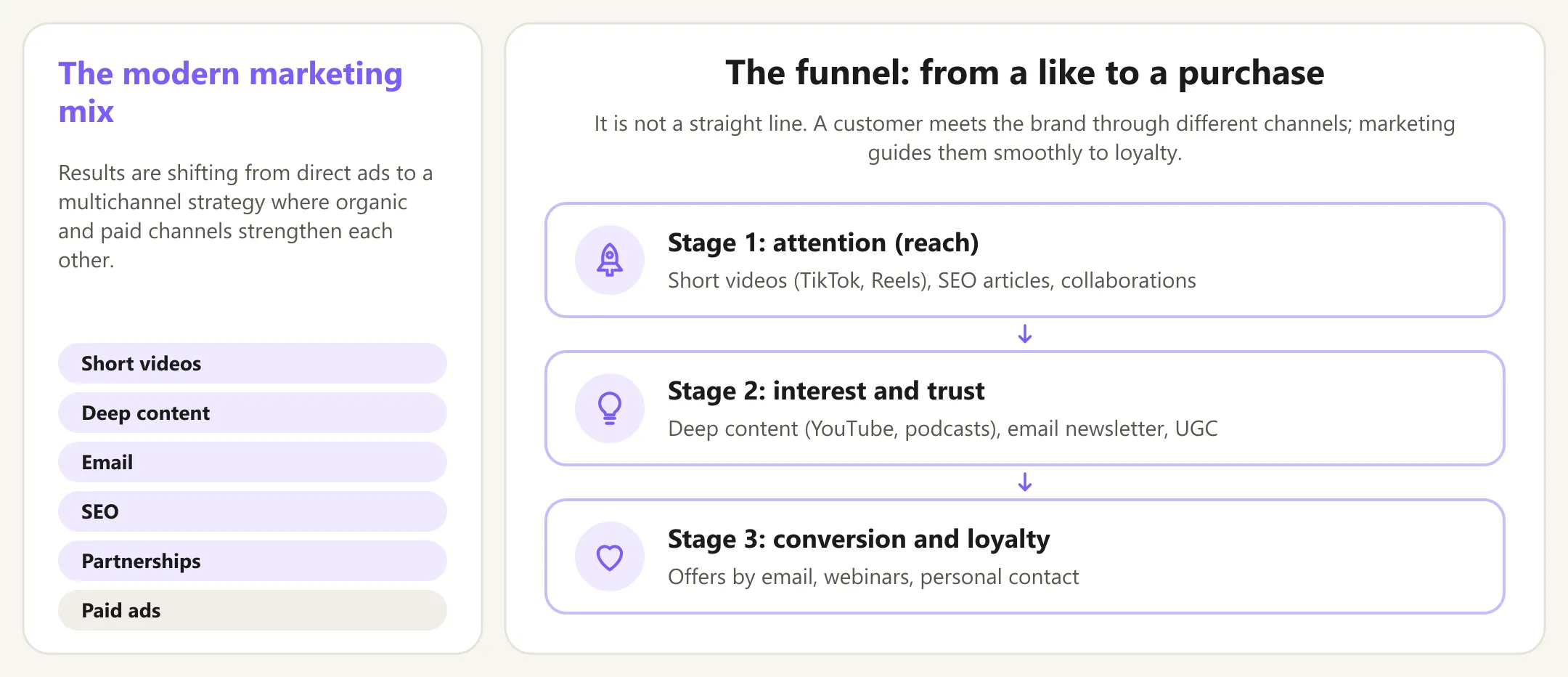
Changes in the customer journey. In 2020, you could get a lead, warm them up with a webinar and close the sale within a week. Now, as noted, the path is longer: “found out → got interested → came to trust → bought” can stretch over months. So the funnel has more stages. Several phases are often identified:
- Lead magnet and sign-up. The customer first meets the brand through a useful free resource (a mini-course, checklist, quiz, marathon) and leaves their contact details.
- Nurturing. Next comes a series of content touchpoints: emails with tips, articles, videos, case studies. The goal is to build trust and expertise, and to show problems and how to solve them.
- Pre-sale (soft sell). Then a cheap product or trial version is offered. This way the person takes a small step (for example, a token payment of €10). This filters out the unserious and turns a lead into a buyer.
- The main offer. Those who engaged are offered the main course or programme, often with a time limit or bonuses.
- Closing and handling objections. Some people didn’t buy but showed interest (opened emails, attended a webinar). They get extra touchpoints: personal emails answering common questions, success stories, direct contact.
- Onboarding and retention. Those who bought need to be well engaged in learning. This is also part of the funnel in the broad sense — it affects LTV. They get a sequence of welcome emails, an invitation to the community, reminders about the start of classes and so on. This is automated through the LMS.
- Repeat sales (upsell, cross-sell). After a while, satisfied customers get offers of other products or a more advanced level. These are based on data (which course they took, what interests them).
Common mistakes in building funnels:
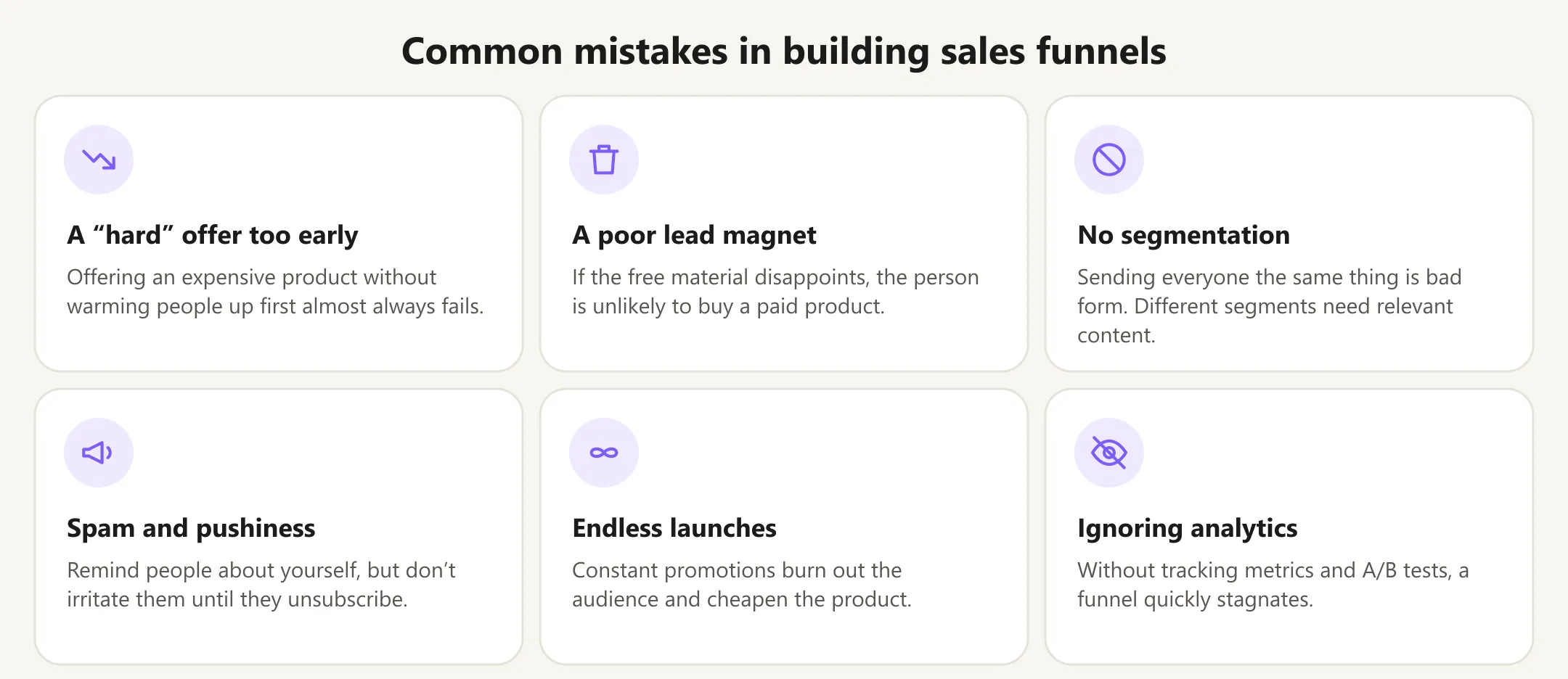
- A “hard” offer too early. Offering an expensive purchase to a lead who doesn’t know you is almost a guaranteed failure now. You need to give value first. The mistake is sending traffic to a sales page without a warm-up in between.
- A poor lead magnet. If the free resource was made in a hurry and disappointed the person, they are unlikely to buy the paid one. The standard now is “give your best away for free” to prove how good you are. This takes effort, but otherwise it is hard to stand out. A poor lead magnet = wasted traffic.
- No segmentation. Sending all subscribers the same email series is now bad form. Different segments (beginners vs. advanced, people interested in different topics) should get relevant content. Otherwise some emails will be uninteresting, and people will stop reading them altogether.
- Spam and pushiness. The balance is fine: you need to remind people about yourself without irritating them. Sending emails every day, even to people who signed up, may annoy them and cause unsubscribes. So may sending social media DMs for no reason. It is far more effective to combine channels (for example, alternate email and retargeting ads). Send direct messages only when there is a reason, if the person has shown interest.
- Non-stop launches with no rest for the audience. Some creators, scared by falling sales, run launches and promotions every month. This burns out the trust of their core audience. People get the impression of an endless sale, and value is lost. Experts advise planning cycles of content vs. sales. You can’t sell all the time. You need periods when you just share information without an offer, or the audience will “cool” towards all your offers.
- Not using analytics enough. There are now many metrics at each step of the funnel. Examples are email CTR, % of a webinar watched, page conversion, CAC, LTV and more. A common mistake is not tracking these figures and not improving them. Successful players test all the time: different email subject lines, different offers, targeting. Landing pages are A/B tested too (for example, headline variations — which gives the higher conversion). Without such improvements, a funnel may stall.
Automated funnels with a human face. Best practice now tries to make funnels less robotic and more personal. For example, trigger emails are sent from the founder by name, not from a faceless brand. Video messages are used in the chain (not only text but a video where the expert says: “Hi, glad you’re with us, here’s what’s ahead…”). This builds trust and response.
Automation platforms. Worth mentioning: there are now tools that make it easier for beginners to build funnels — builders with templates. But it is important to understand that technology is only a tool. What matters most is strategy and understanding the customer’s psychology. “Turnkey” funnels are sometimes sold as magic, but without adapting them to your audience they won’t work.
To sum up: successful funnels in 2025 are flexible, multi-stage and at the same time personalised customer journeys. They combine automation (for efficiency) with manual support (for empathy). They are built on data and constant improvement. And it is very important that the content of the funnel (emails, webinars and so on) speaks to the customer’s needs and is genuinely interesting. A funnel is a continuation of your teaching, only before the sale. Start teaching and helping before you get paid, and there is a good chance you will get paid in the end.
6. Niches and topics: where demand is falling and where it is growing
The course business covers many niches — from professional skills to hobbies. Each area has its own demand trends. Let’s look at several popular areas: marketing, psychology and self-development, languages, creative skills and soft skills — and what is happening in them.
Marketing and business skills. The niche of teaching marketing, social media and sales is extremely saturated in English-speaking markets. During the pandemic there was a surge: thousands of people rushed to learn digital marketing (as businesses moved online). Now there is something of an oversupply — there are so many digital marketing courses that it is hard to stand out. Many basic topics (setting up ads, SEO basics) are available free on YouTube, or the platforms themselves (Facebook, Google) offer free certifications. So demand has shifted towards more advanced and narrow courses.
Sub-niches are growing: data analytics in marketing, managing a marketing team, CRM automation, content strategy for niche industries and so on. People who already know the basics look to improve in specific areas. Beginners often go not to independent course creators but to large platforms (Coursera, LinkedIn Learning) or online universities for structured marketing education. This is because they don’t trust solo players much. Still, practical programmes from working professionals are in demand. For example, a performance marketing course where the teachers work at agencies and go through real cases. Or mentoring programmes of the “build your own marketing project with an expert” kind. So a learning product must give what a free Google course won’t — experience, feedback, current know-how.
Marketing changes very fast (algorithms and trends change all the time), so schools that keep updating their content have a strong advantage. Those selling a 2019 course without changes lose customers — and word gets around fast. A separate topic is courses on online business (how to launch a startup, how to scale a company and so on). In 2023 interest in startup topics fell in the USA (perhaps because of lower investment). But demand for practical skills remains (for example, financial management for small businesses, unit economics).
Where it is growing: marketing with AI (generative content, AI for analysis). It is a new field, there are few courses, and many people want to learn.
What works in the marketing niche: building the expert’s media brand. For example, Philip Kotler (a marketing guru) — people come to learn from him because of his name. Now new faces are building their brands: writing books, speaking at conferences, running blogs — and so attracting a serious audience. A simple “marketing blogger” with a €100 course finds it harder to compete; you need either authority or a unique specialisation. Marketing schools often win when they give measurable results. For example, there is a course with project work, at the end of which the student has a ready marketing plan for their company.
Psychology, self-development, coaching. The situation here is unusual. On the one hand, after Covid, interest in mental health and mindfulness grew, and many people started looking for psychological support. On the other, lots of dubious “happiness coaches” damaged trust. So the niche is splitting in two. Demand is growing for academic, evidence-based programmes (for example, a mindfulness course from a psychology professor, or certified training in cognitive therapy). At the same time, charismatic opinion leaders (like Tony Robbins) still have an audience that believes in their self-development methods. Overall, though, the audience has become more critical. Plain motivational training without specifics no longer sells so easily. People ask: “What are your credentials? Are you a qualified psychologist or just a life coach?” — and more and more often choose those with serious qualifications. The crisis of trust is most visible here: there have been lawsuits against course coaches for false promises, which has made people wary.
Still, the fatigue and stress of modern society create demand for psychological knowledge. Courses on burnout, relationships, parenting and mindfulness are quite popular. But most people don’t want a “diploma”. They want a specific skill or transformation: to learn to manage anxiety, improve communication in the family, raise their self-esteem and so on. Course products that offer measurable practice get good reviews. An example is a 21-day course with daily exercises to reduce anxiety, with checklists and a psychologist’s support. Where demand is falling: esoteric and pseudo-scientific topics. You used to be able to sell a “spiritual abundance course” on a wave of hype. Now the English-speaking audience is more sceptical, and there is competition from free content (YouTube is full of meditations and psychology lectures). So you can earn from this only with a scientific framing or a cult following of loyal fans.
What works in the psychology and coaching niche: group transformation programmes with a strong community element. For example, a closed group of women on a 3-month life-improvement coaching programme. They meet online once a week, discuss and support each other, and the coach guides them. This gives a sense of belonging and the group effect — it is easier for people to change when they are not alone. Many note that the main thing in such programmes is not even the content, since everything can be found in books. It is the support and the structure of the process. So successful coaches now sell not just a course but “a transformation journey with me and the group”. Such programmes can be expensive, but people pay for the promised better quality of life.
Languages. Language learning is a timeless topic. On the one hand, there is competition from free options (Duolingo, free “English lessons” videos). On the other, there is high constant demand (millions of people want to learn English, Spanish and other languages). In recent years, the models in this niche have also changed. There is less demand for classic big grammar courses (apps and YouTube replaced them). But interest in conversation practice and specialised courses is growing. For example, a person doesn’t need general lessons but business English for IT, IELTS exam preparation or Spanish for doctors. Narrow courses from native speakers or experts are valued. People also understand that you won’t learn to speak on your own in an app. So they are ready to pay for a mentor or a speaking club. The subscription model works: a subscription to an online language school with daily group classes with teachers (like “unlimited group lessons per month”). Or a subscription to a materials library + weekly conversation practice. One-to-one online lessons (a tutor on Zoom) are still a popular format, especially through marketplaces (Preply, italki). Language course creators often combine formats: they sell a recorded course and include a number of speaking clubs with a teacher. This gives both scalability and results.
Technology has an effect too: AI translation and phrasebooks have appeared. But they don’t replace the motivation to learn a language — rather, they help at the beginner stage. In English-speaking countries, interest in learning foreign languages has grown (for example, Spanish because of demographics, Japanese because of anime culture and so on). Online courses have become a key way to learn, since not everyone can attend classes in person.
Promotion in the language niche: showing students’ real skills. For example: “6 months ago Maria couldn’t speak French, and here’s a video of her chatting with a native speaker — all thanks to our method”. People want to be sure the method works better than what they have already tried. Many were burned by language lessons at school and are sceptical. So positioning matters: a new, more effective method — for example, TPRS (learning through stories), full immersion without translation, or a special word-memorising programme. If you can show that the method is progressive and has reviews, customers come.
Where it is growing: courses for bilingual children and courses for emigrants. Many families are bilingual, and the market for children’s materials and courses is growing. People who move abroad urgently learn the local language. They are ready to pay for a fast-track course with a native speaker who knows the cultural nuances.
Where it is falling: general expensive “English from zero to Advanced” courses without support — it is hard to compete with free resources. Such courses sell only if they come in a convenient app and are cheap (like the paid version of Duolingo).
Creative skills (design, photography, art). During the pandemic, many people took up hobbies — drawing, photography, graphic design. Now the excitement has calmed down, but creative courses are in steady demand, especially as a way to earn extra income or discover a talent. For example, UX/UI design courses are still popular, because the profession is well paid and getting into it is relatively quick. Photography and video-editing courses are popular too, because many people want to make content. What has changed: the market is flooded with large platforms like Domestika and Skillshare, which offer cheap access to many creative courses at once. This makes it hard for independent authors to sell their drawing lessons for €200. A student can get hundreds of lessons on Skillshare for a low monthly fee. So successful creative course products go down the path of strong differentiation and community. For example, a well-known artist launches a course where they personally give feedback on students’ work. Mass platforms don’t have this, and fans are ready to pay for the chance of feedback from a master. Or a photography school organises joint photo reviews and contests between students, which creates excitement and skill growth. So they add what passive video courses lack: interaction, individuality, the mentor’s brand.
Where it is growing: digital art, 3D modelling, working with AI tools (many artists are learning to use Midjourney and others). New tools = demand for learning them. Where it is stable: music and singing — people always want to learn, and online music lessons have become normal. Where it is difficult: traditional fine arts without a practical use — selling an oil painting course can be hard unless you have a name. But as a hobby subscription (a new drawing lesson every week), it works, because people love creativity for relaxation.
Soft skills. This category includes communication, leadership, time management, creativity, emotional intelligence and so on. For companies, developing employees’ soft skills has become a priority — especially with the growth of remote work and multicultural teams. So the soft skills training market is growing fast (about $33 billion in 2024, according to IMARC). Many B2B training companies have moved online, offering firms courses on communication, team management and so on. There is demand from individuals too: young professionals understand that career success often depends on soft skills that universities don’t teach. For example, presenting, negotiating, managing time. They look for online courses or coaches for these skills.
What is special about soft skills courses is that they are harder to measure (“have I got better at communicating?” is subjective). So certificates and recognition matter more. People trust accredited programmes with a recognised certificate more. Examples are a management course with a certificate from a known school, or from PMI and so on. The trend is short official courses (for example, a Nanodegree in leadership).
In the course business, productivity coaching groups are popular. For example, a group gathers in Notion or another tracker; everyone sets goals for the week and reports back — under a coach’s supervision. This helps people put time management into practice.
Where it is growing: online communication skills (managing a remote team, running virtual meetings — new for many managers, who are learning this). Where it is falling: perhaps topics like “charisma in 24 hours” and other half-baked offers — people have become more careful. Again, corporate training takes part of the market. A person may not buy a public-speaking course themselves, but their company will buy a webinar on the same topic for all its staff.
Notes on other niches:
- IT and programming. The boom has cooled a little since 2021, but demand is still high — many people want to get into IT. Large platforms (Udemy, Coursera) and local schools compete. There is room for course creators too, especially with a narrow specialisation (say, a cybersecurity course for a specific industry). Many have adopted the “from training to a job” model, which is very attractive. Courses on AI and data science are in the highest demand.
- Finance and investing. After crypto and the stock market took off in 2021, many people rushed to learn investing. Then the market fell, and interest dropped too. Rules also became stricter (in some countries you need a licence to teach investing). So “millionaire courses” have lost some of their charm. But there is still an audience for courses on personal finance and financial literacy — these are more down-to-earth and useful, and always relevant.
- Health, fitness, yoga. Online workouts and wellness courses (nutrition, healthy living) remain popular. Many people never went back to the gym and find it convenient to train at home with an online coach. Digital health coaching is gaining ground — certified nutritionists and trainers guide clients through apps and chats, without meeting in person. Trust matters here (people want a real professional, not just a fitness blogger). But the market is big, especially since care for health grew after the pandemic.
Overall conclusion on niches: almost everywhere there has been a shift from mass products “for everyone” to more targeted and advanced offers. Expertise and quality matter more — buyers are choosier. Niches are not disappearing, but within them attention is moving to those who can offer either unique content or a unique format (community, practice). Demand is falling where there was clear overheating and where technology or free sources meet the basic need. Growth is where new needs appear (new skills, tools, post-pandemic realities) or where online formats remove old barriers, for example in company training.
AI lessons on Patreon (in Russian): https://www.patreon.com/cw/mnogobukoff_ai
My contacts:
Instagram https://instagram.com/mnogobukof
Patreon https://www.patreon.com/c/mnogobukoff_ai