Promoting your brand and services on social media is becoming an essential part of success for experts, including those such as psychologist-hypnotherapists. After all, clients’ trust is built through personal presence, real success stories and quality content. With videos, articles and interactive elements, you can show your expertise and build a real connection with your audience.
In this case study, I’ll tell you how I created a content strategy and optimised a psychologist-hypnotherapist’s blog. The goal was more clients and more trust in the specialist.
The channels we chose for promotion: Instagram, YouTube, Facebook, a website.
STAGE 1. Analysing the psychologist-hypnotherapist’s target audience
This stage matters because it shows which issues people most often bring to a psychologist-hypnotherapist, a coach or a psychologist:
- Finding inner balance and harmony, dealing with burnout.
- Raising self-esteem and self-confidence.
- Managing stress and getting rid of anxiety.
- Getting through personal and professional crises.
- Finding the motivation to reach goals.
- Improving relationships with other people.
- Finding meaning in life and a sense of purpose.
- Improving quality of life and finding happiness, learning to accept and love yourself.
- Gaining financial independence and prosperity.
- Developing leadership and management skills.
- Finding joy in everyday life and work.
- Overcoming social fears and phobias.
- Finding a partner and improving your love life.
What people are most often afraid of, and what may scare them about hypnosis:
- High cost of services, not knowing how many sessions it will take to get results.
- Doubts about online sessions.
- Uncertainty about the specialist’s qualifications.
- Fear that family and friends won’t understand why they went to a psychologist-hypnotherapist.
- Preferring traditional treatment methods.
- Distrust of hypnosis and alternative methods.
- Worries about the privacy of personal data.
- Fear of change and doubts about long-term results.
- Not understanding the process: will they be manipulated, will bad beliefs be planted in them, and so on.
- No visible results from earlier attempts at self-development.
What may encourage people to book a session with a psychologist-hypnotherapist:
- Proof of success and client reviews.
- A guarantee of privacy and safety.
- Moderate prices and flexible plans.
- Clear results and expectations (perhaps a money-back guarantee).
- A personal approach and individual programmes.
- Free trial sessions or introductory webinars.
- Well-prepared materials for self-study between sessions.
- A range of offers: one-to-one consultations, group sessions, seminars.
- Client loyalty and bonus programmes.
- Open communication and the specialist being available outside sessions.
- A flexible session schedule and online consultations being available.
- Short courses for busy people.
- Showing that the methods are simple and science-based.
This analysis will help me later, when creating the content.
STAGE 2. Analysing competitors, or what successful psychologist-hypnotherapists talk about in their blogs
The analysis showed that successful psychologist-hypnotherapists run accounts on YouTube and Instagram. English-speaking colleagues also actively use Facebook and X (formerly Twitter).
- Successful specialists post many “talking head” videos, where they motivate people and explain processes. All the content can be made of such videos, with more or less editing.
- Videos that show the hypnosis process.
- Text posts with real stories told as dialogues.
- Motivational posts and videos that solve a client’s specific problems.
- Many big names sell courses that teach hypnosis, or other online products. They spend more time teaching than consulting.
- Among Russian-speaking specialists, there are small blogs full of esotericism, shamanism and the like.
- English-speaking specialists often post other people’s quotes, motivational pictures and personal videos.
- Russian-speaking specialists run YouTube channels with affirmations and meditations, and post parts of their training programmes or practices for clients.
STAGE 3. Creating a content plan
Types of content that can add variety to a psychologist-hypnotherapist’s page:
-
Educational posts and articles — overviews of self-development techniques, confidence-building exercises and methods for emotional recovery.
-
Infographics — visual data on the benefits of personal growth and statistics on how well the psychologist-hypnotherapist’s methods work.
-
Interactive quizzes and tests — self-assessment tests and quizzes on personal growth. At the end, a link to book a session with the psychologist-hypnotherapist.
-
Live streams and webinars — live broadcasts where the psychologist-hypnotherapist answers questions and runs short training sessions.
-
Success stories — how the psychologist-hypnotherapist helped clients overcome obstacles in life.
-
Quotes and motivational posts — inspiring quotes and motivational content.
-
Blog posts — in-depth articles on personal growth.
-
Guides and checklists — practical guides to self-development, time management and reaching goals.
-
Interviews with experts — conversations with other specialists in psychology and self-development.
-
Interactive elements — Q&As, polls, challenges, quizzes.
-
Video series on specific topics for deeper study.
-
Regular Stories features — for example, “Tip of the day” or “Time-lapse video” of morning routines.
Every piece of content must include a call to action and an invitation to book a consultation.
Examples of useful educational content:
- “5 steps to self-confidence without expensive training”.
- “Turning stress into success: simple techniques”.
- “How to choose the right coach or psychologist-hypnotherapist: understanding qualifications”.
- “How to stay motivated: secrets from a psychologist-hypnotherapist”.
- “Why it’s worth investing in personal growth: the long-term benefits”.
Ideas and scripts for promotional Reels:
- A client’s success story: their own account of how they changed.
- A day in the life of a psychologist-hypnotherapist: how a session goes.
- Educational content: why it’s important to take care of your inner world.
- Showing the working method: part of a session (without breaking confidentiality).
- The benefits of online sessions: convenience and accessibility.
- Animated psychology concepts: explaining complex processes in plain language.
Films where hypnosis is used for bad purposes:
- “Trance” (2013).
- “Get Out” (2017).
STAGE 4. Creating content: text, still images, video
Writing articles and filming material for posts, carousels and short vertical videos for the expert’s Instagram and YouTube blog. AI tools can help with writing texts and analysing how well they work (more about this in a separate article). You can read about the basics of filming and editing in this article. We didn’t do a photo shoot with the expert. Instead, we made professional photos with AI face-swap bots.
Instagram feed designs that the client liked.
Option 1

Option 2

Option 3
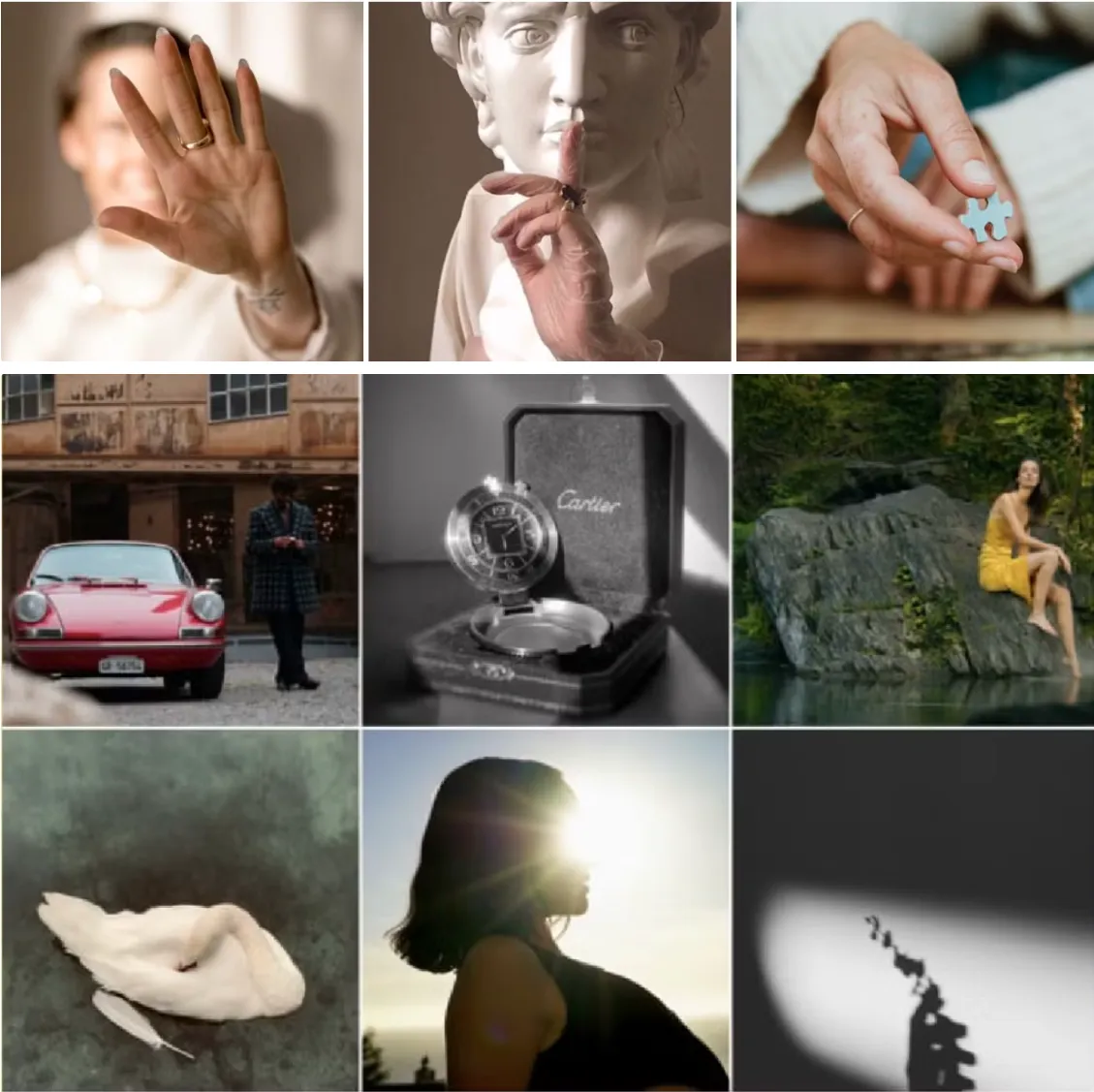
Option 4

Creating quality, useful content is the key to promoting services successfully online. People want to know who is behind the practice and how your methods can improve their lives.
I share useful materials on creating marketing strategies with AI, making post covers and much more. Follow my Instagram https://instagram.com/mnogobukof/, and tag me in your Reels or Stories if my tips helped you. Take a step towards success and promote yourself professionally!